
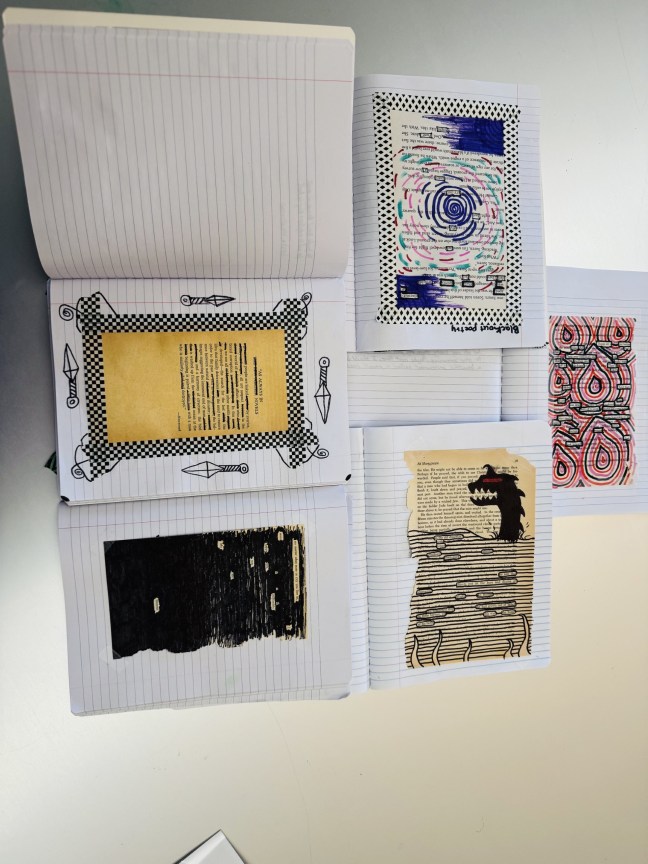
Day three of the 2026 Young Writers’ Workshop focused on empathy, perspective, poetry, art, and fiction as our young writers spent the day exploring different ways of seeing the world through writing.
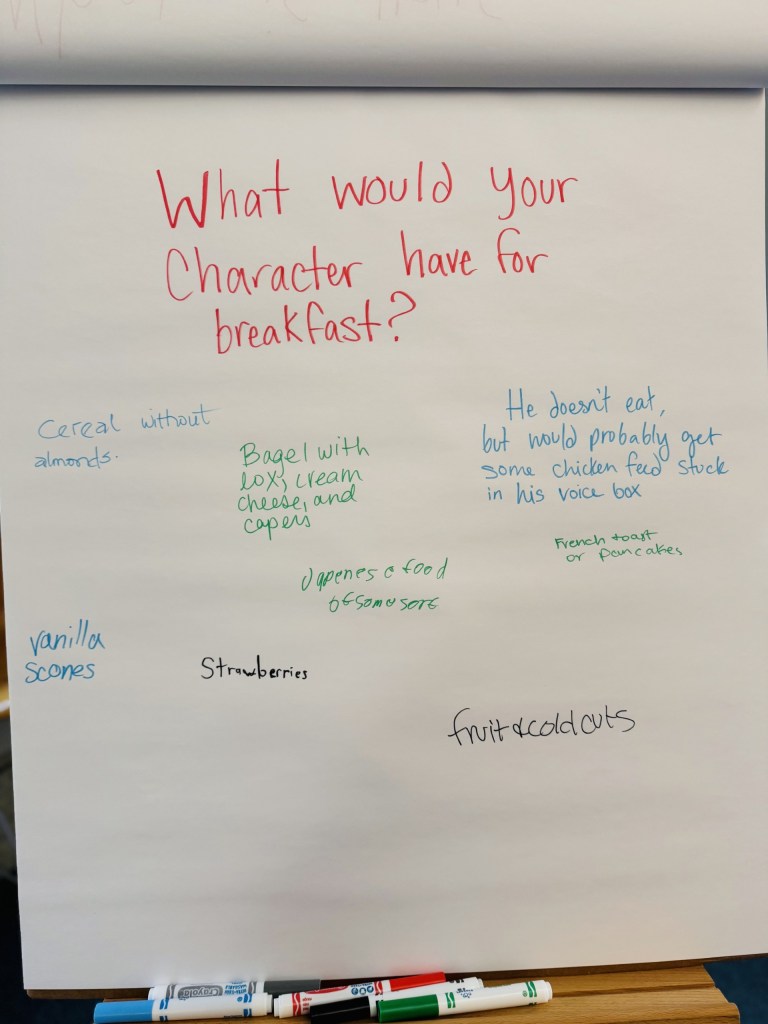
The day began with the Question of the Day: “What would your character have for breakfast?” The young writers shared creative and often humorous responses while continuing to develop the characters they created earlier in the week.
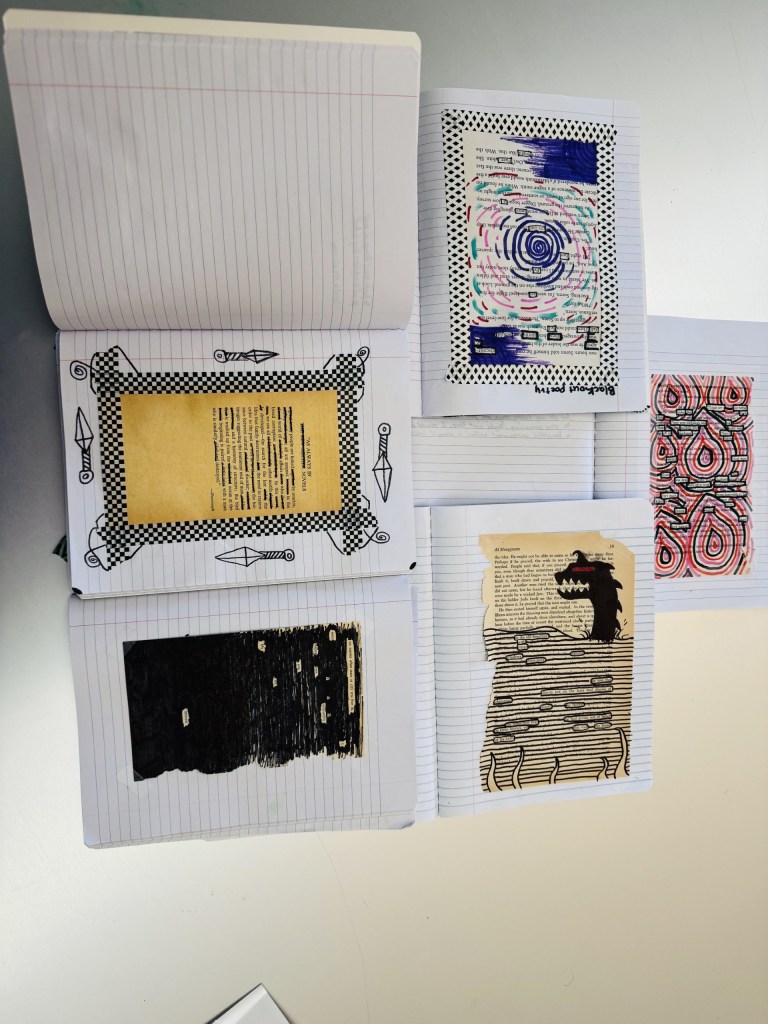
Afterwards, Maranda introduced the group to blackout poetry. She shared examples of blackout poems and demonstrated different artistic approaches to creating them. The young writers selected texts they wanted to work with and began searching for words and phrases hidden within the pages. They went ahead to circle words, draw designs, and transform existing texts into original poems. At the end of the activity, several young writers shared their blackout poems and explained how they discovered them.
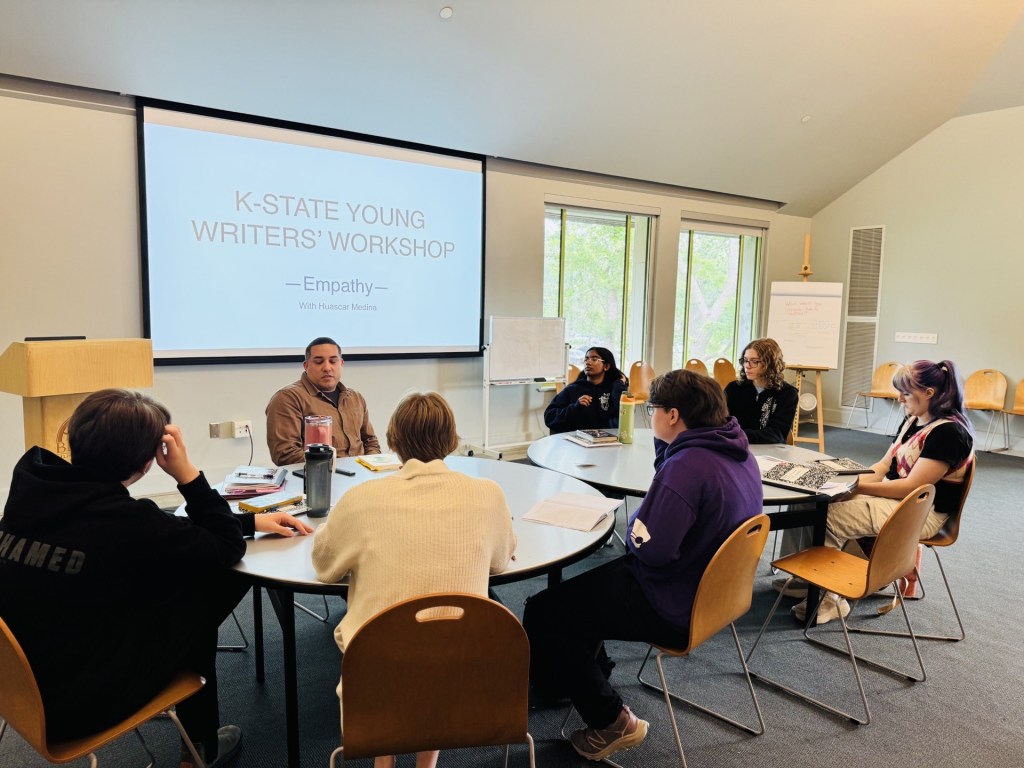
Later in the morning, our visiting writer, Huascar Medina, Kansas Poet Laureate from 2019 to 2022, joined the workshop. He began by inviting the young writers to introduce themselves, share why they joined the workshop, and discuss a favorite book, writer, or genre. The conversation revealed a wide range of interests, from fantasy and romance to poetry and contemporary fiction.
Huascar then shared some of his poems, including “Un Mango Grows in Kansas,” “Surrogate City,” “In the Red,” “2024 PT5,” “Tornado Sirens,” and “Bone Divination.” As he read, he discussed the experiences and memories that inspired the poems and spoke about the importance of empathy in his writing. He explained that empathy helps him connect more deeply with his work and allows readers to connect with it as well.
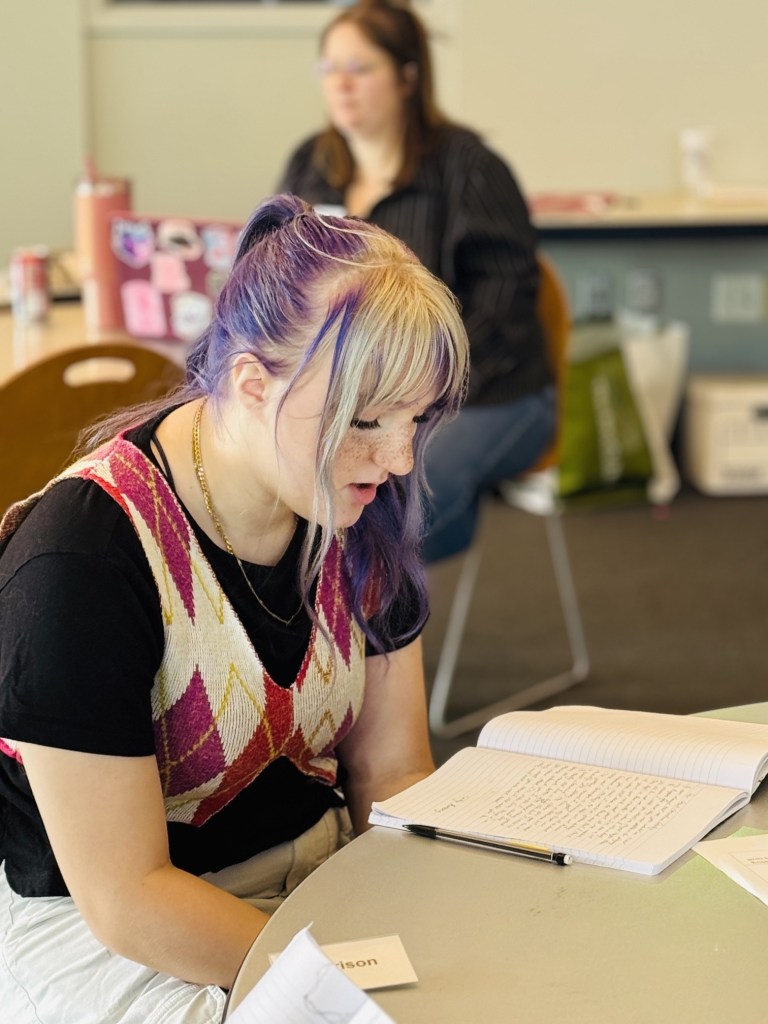
The first writing prompt asked young writers to think about someone they would like to speak with and write that person a letter. Some wrote to younger versions of themselves, while others wrote to people they missed, people they no longer spoke with, or people they hoped to understand better. When it came time to share, many of the letters were emotional, thoughtful, and deeply personal.
For the second prompt, the young writers reread their letters and imagined themselves as the recipients. They then wrote responses back to the original writer. The activity challenged them to step into another perspective and consider how someone else might feel, think, or respond.
The final prompt asked the young writers to become observers of the conversation. Rather than writing as either person, they wrote as outsiders watching the exchange unfold. At the end of the session, Huascar invited them to reflect on how empathy influenced each stage of the writing process and what they learned from shifting perspectives. The discussion focused on the challenges of writing from different points of view and how perspective can change the way a story is understood.
Before concluding the session, Huascar generously gifted copies of his poetry collection Protest as Love Poem to the young writers. Then the young writers moved to having lunch from Jimmy John’s with our visiting writer.
After lunch, the workshop shifted to ekphrasis, a form of writing inspired by visual art. Maranda introduced the concept and shared examples of artworks paired with poems they inspired, including Vincent van Gogh’s Starry Night alongside Anne Sexton’s poem The Starry Night and Paul Cézanne’s L’Estaque alongside Allen Ginsberg’s Cezanne’s Ports.
For the activity, the young writers worked in pairs and visited the galleries to select artworks that resonated with them. Together they spent time observing the pieces before taking turns writing lines inspired by what they saw. Once each notecard contained six collaborative lines, the writers used those lines to create original ekphrastic poems. One goal of the activity was to incorporate at least two lines written by their partner into the final poem.
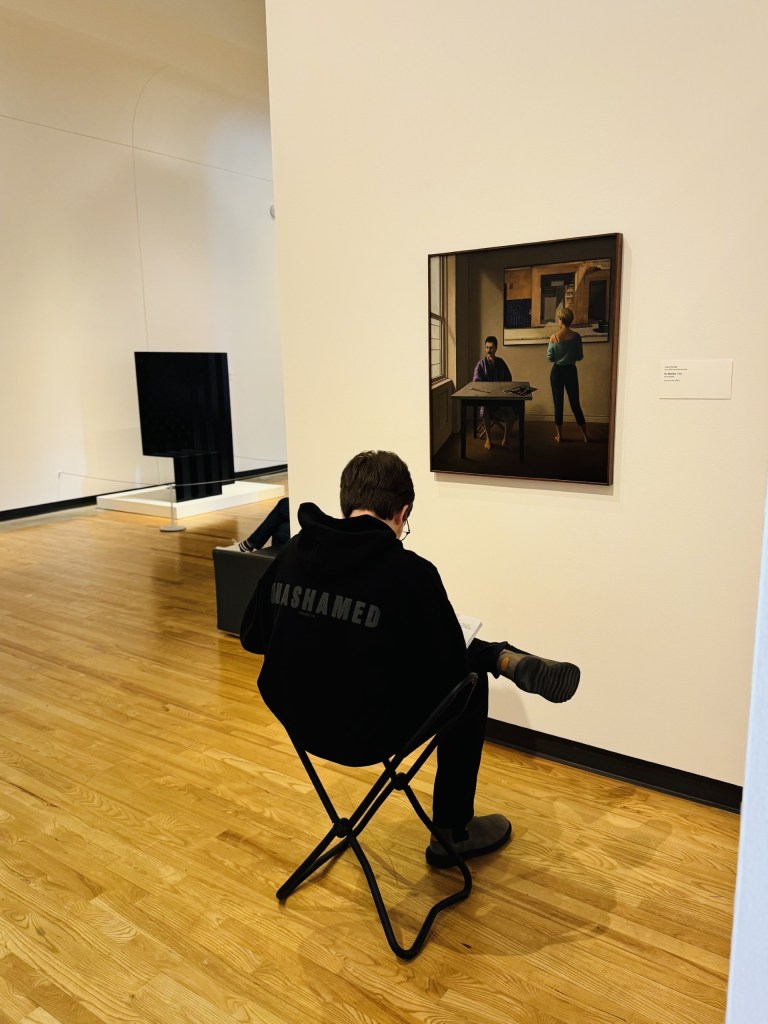
Several artworks inspired the young writers, including No Masters, Whale, Magpie, Tornado and Fire, and Chikano Homeland. The resulting poems embodied careful observation, imagination, and personal interpretation of the artwork. Afterwards, the young writers shared their ekphrastic poems with the group.
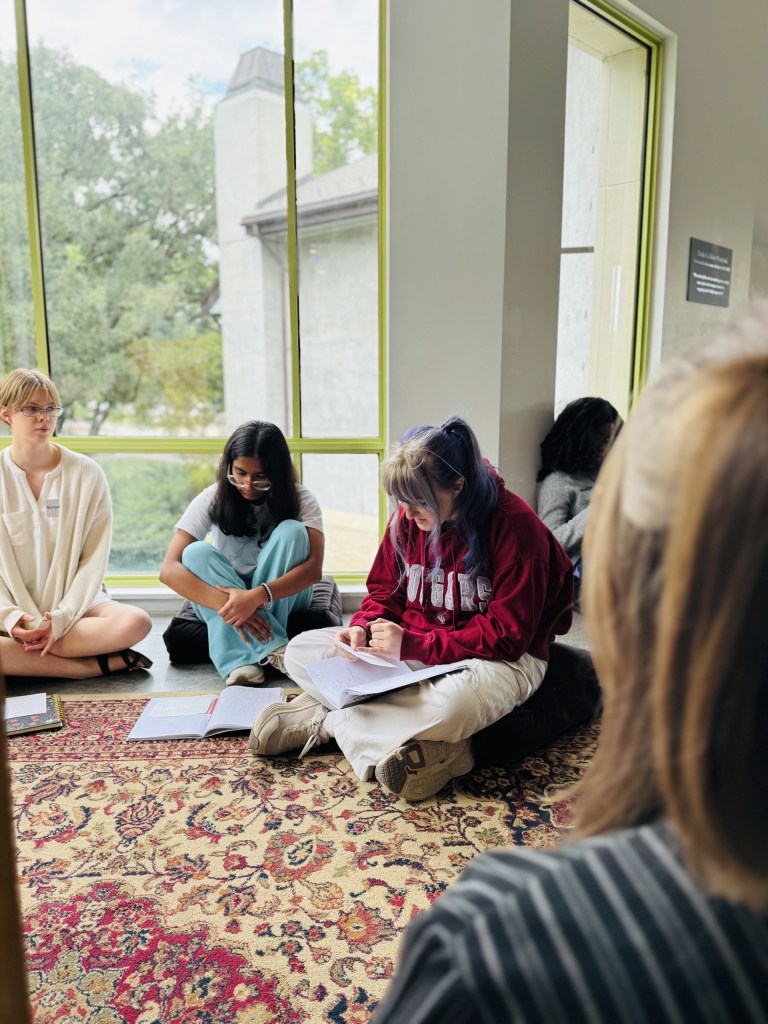
Following a short break, Mira facilitated a collaborative storytelling activity called Piece the Story using Langston Hughes’ Thank You, Ma’am. Working in two groups, the young writers received pieces of the story and worked together to place them in the correct order. Both groups successfully reconstructed the narrative.
The afternoon continued with a series of games. In one activity, writers responded to prompts by quickly generating rhymes verbally.
The group then played Pass the Story. Each young writer added a single line to a story before passing it to the next person. Writers could only see the most recently written line, resulting in stories that were unpredictable and often witty.
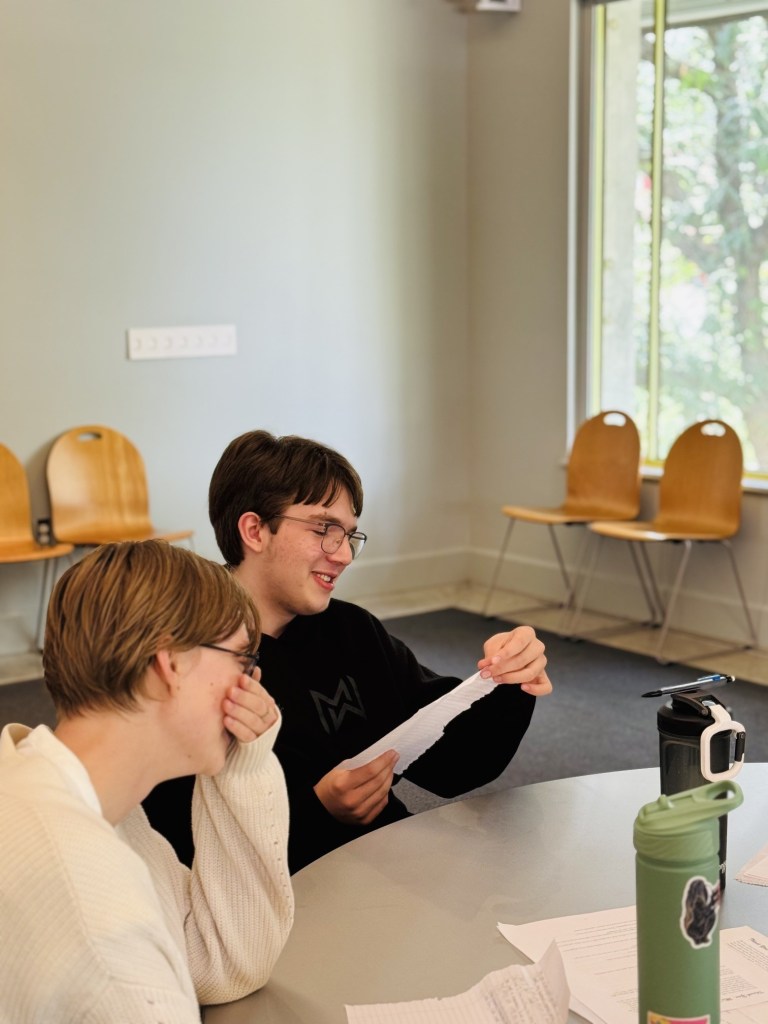
The final session of the day focused on fiction writing. Mira introduced three important elements of storytelling: character, setting, and problem. To help strengthen their descriptions, the young writers participated in sensory exercises where they imagined a storm, a forest, and a secret tunnel beneath their school. They recorded what they could see, hear, feel, smell, and taste within each setting.
Next, the writers explored the “Power of What If” by creating their own story questions and developing characters, settings, and conflicts from those ideas. They then participated in a twenty-minute story sprint, writing continuously and allowing their stories to unfold without stopping to edit.
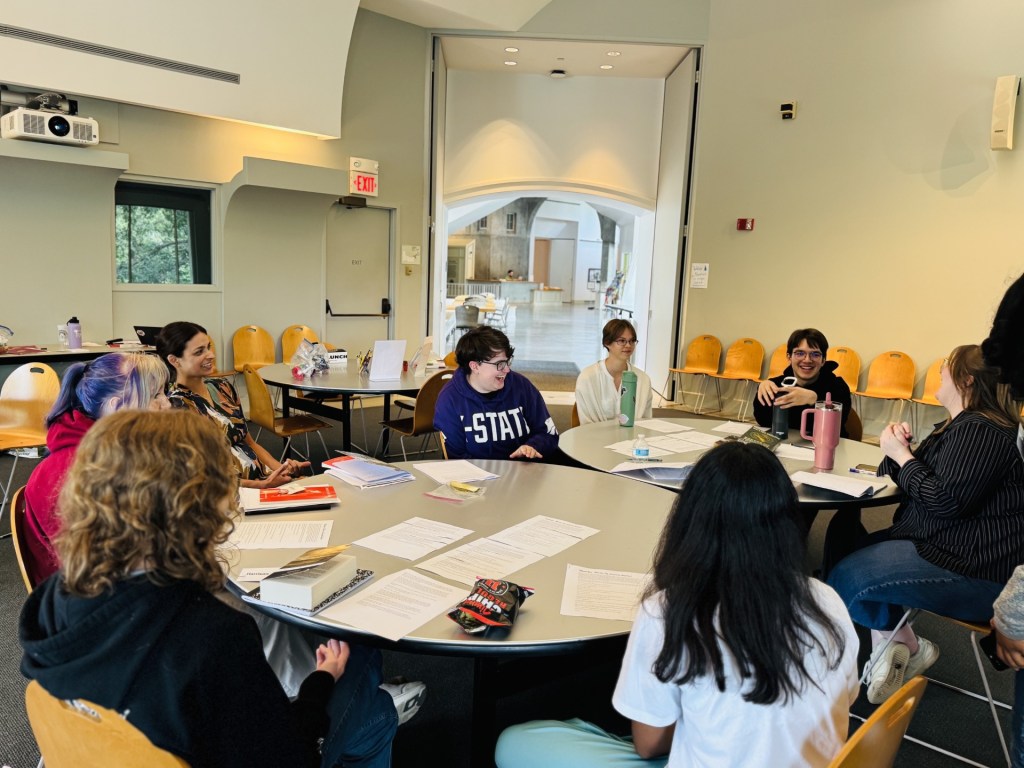
Afterward, the young writers exchanged stories with partners and discussed which details brought the stories to life, what they liked about each other’s characters, and what they wanted to learn more about. The conversations provided valuable feedback and helped writers recognize the strengths in their work.
During reflection, Morgan shared that one strategy that helps when they become stuck is simply writing down “What happens next?” The technique allows them to keep moving forward without becoming discouraged by uncertainty.
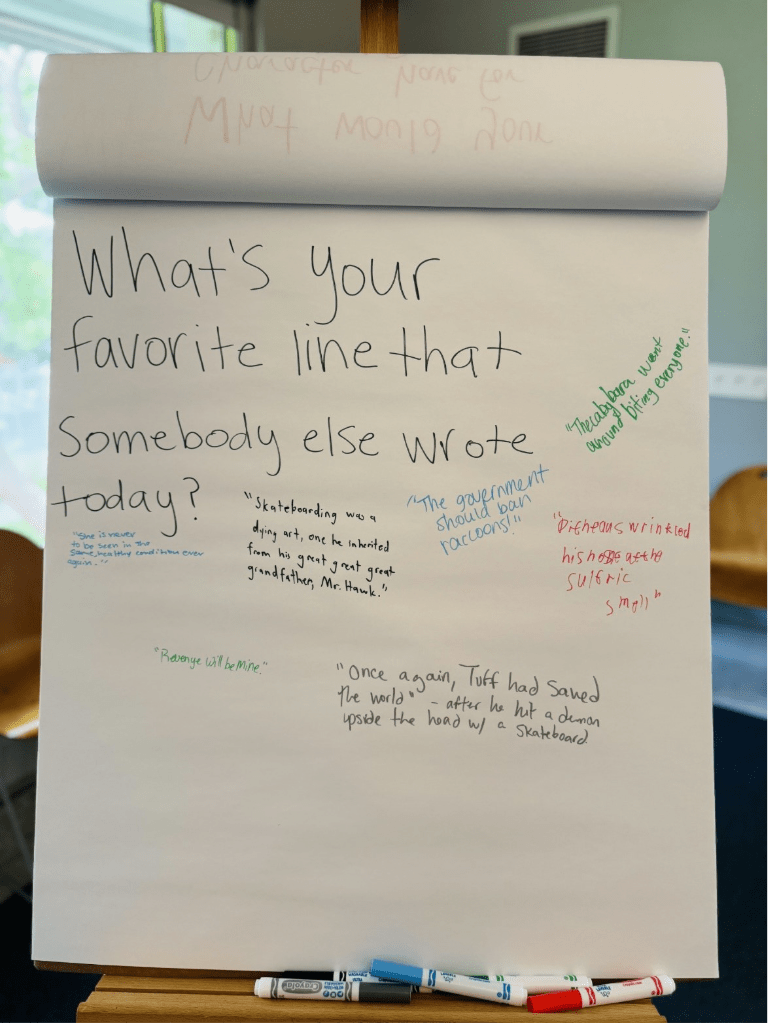
The day concluded with an empathy-focused reflection. The young writers responded to the question, “What is your favorite line that someone else wrote today?” By highlighting each other’s words, they celebrated the creativity and perspectives of their fellow writers.
To end the day on a more fun note, the group, led by Ian, played a lively game of Detective and Mafia, stepping into character as detectives and suspects while trying to uncover the hidden mafia members. The game provided a fun and energetic conclusion to a day filled with poetry, storytelling, empathy, and imagination..
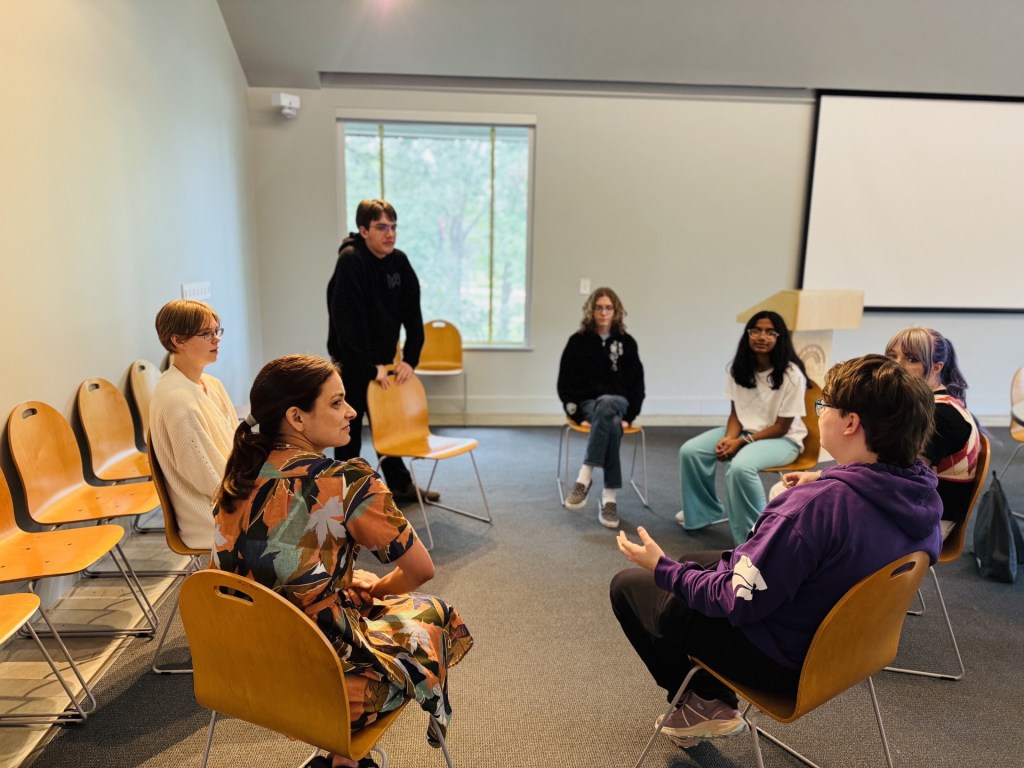
Overall, day three challenged our young writers to step into different perspectives, whether through letters, poetry, art, or fiction. Through exploring each activity, they discovered that understanding another person’s point of view can open new possibilities for writing and storytelling.
Tomorrow we will be welcoming a graphic novelist! We look forward to bringing you more updates.
-Ruth Okon, Program Assistant

