
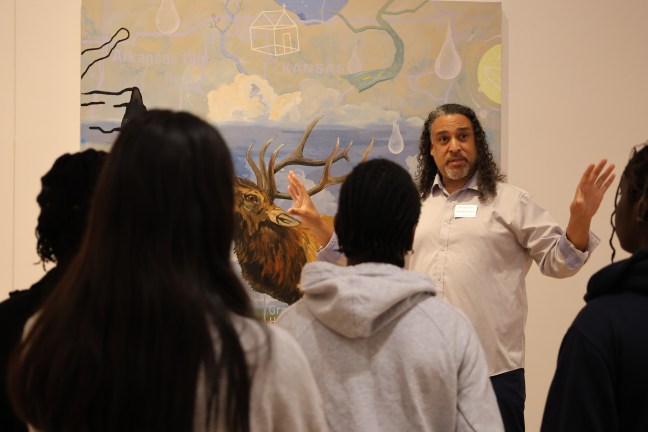
We started Day 2 of our workshop with a session on Visual Thinking Strategies (VTS).
I bet that, at least once, you have seen an artwork described it as “beautiful.” Other times, you might have felt the artist just made scribbles for elementary schoolers; or maybe you’ve had a mix of both experiences! This morning, Nate McClendon, Outreach Specialist at the Beach Art Museum broke through our description stereotypes in a very artful and engaging session.
Beyond describing an artwork as “good,” “beautiful,” or “artistic,” Nate led us examine our “whys.” Why do you imagine that a red line is “blood”? Why do you call a box-like object a treasure chest?

Nate guided the writers to see writing as communication. Effective communicators are active listeners, and so we “listened” actively to some art works at the Beach Museum of Art.
Through that activity, we examined our thoughts and meaning-making processes. By the end of the session, the young writers understood that perspectives can change just by receiving new information. They left the session armed with the freedom to think, break through stereotypes, become more expressive writer-communicators.

After the VTS session, we put our knowledge to work by writing about any artwork of interest.
Led by instructor Maranda Haile, each young writer walked round the Beach Art Museum and selected a painting or photograph. Each selected artwork was to serve as an inspiration to bring back a lost memory or life moment. The young writers went on to capture those moments in descriptive words, putting their knowledge from yesterday’s imagery building activity to work. By the end of the activity, some young writers described their experience as searching for “poetic pieces” while others felt like the artworks “talked” to them!

Getting comfortable with writing poetry; breaking popular poetry myths
Our visiting writer for today, Melissa Fite Johnson, immersed us in poetry through a different technique that helped us to break popular poetry myths and stereotypes. We read poems with different personas — some obvious, some hidden — and that reading rekindled a love for poetry in our writers. Melissa’s session was a buffet of many poems: “Cafe Loop,” “Monologue for an Onion,” and “When Mom braids My Sister’s Hair,” among others!

The younger writers practiced writing with different personas. First, Melissa asked them to write dialogue as yourself. After writing, they read a few lines out loud, and next, they wrote with the direction to “not be yourself,” taking on a different personality, character, object, or animal.
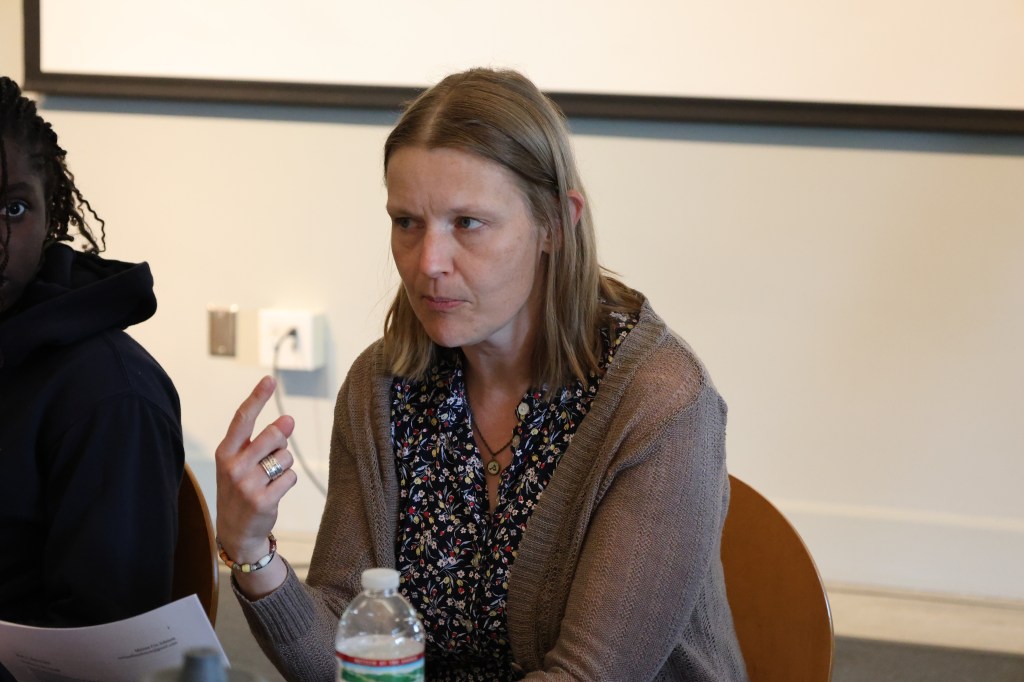
After Melissa’s visit, we had a lunch break, and, after lunch, the young writers transitioned into a fiction activity.
Piece the Story
Have you ever pieced a puzzle and the only clue you had was just a piece of the puzzle? Our students pieced a puzzle together writer through a “Piece the Story” activity led by instructor Miracle Okpala.

Mira divided the young writers into 3 groups and handed each group pieces of mixed-up paper strips containing paragraphs from a particular story. Their task was to read the pieces and work together to reconstruct the story in what they believe is the correct sequence. How hard can it be to think like another writer and attempt to write their story for them? Well, our young writers put all their great minds to work on the story puzzle and were able to put together small portions of the story.
Eventually, Mira revealed the original version of the story, and the students compared it with their reconstruction. The writers ended the session by reflecting on the different thought and interpretation processes they encountered while piecing the story together.
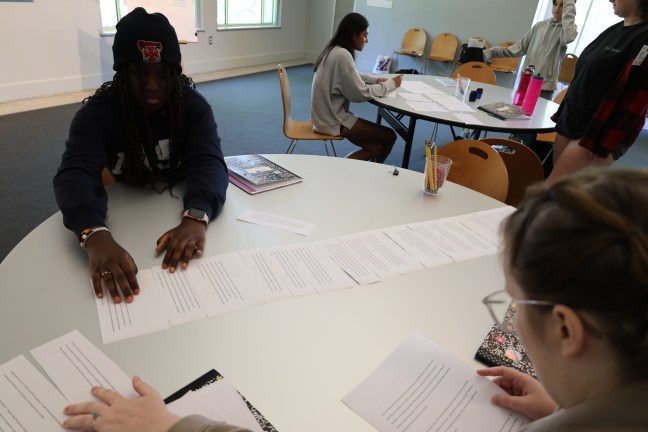

It was an opportunity to put themselves in the shoes of another writer, stretch their imagination, and build their comprehension skills.
Collage Poetry and Character Building
Following that activity, we had a quick warm-up exercise. Well, given that we had not been in the sun all day, it was rewarding to create our own warmth!
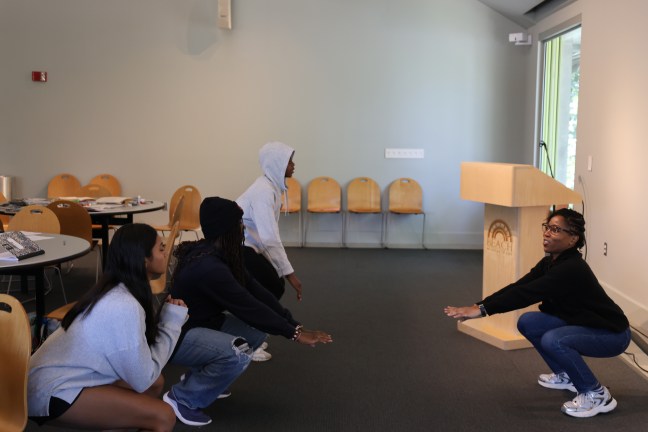
Then, instructor Maranda guided the writers to make collage poems. For this activity, the writers cut words, phrases, and pictures out of books or magazines to create a poem. Using glue or tape, they added the cut-out words or phrases into their notebook, while also decorating the page to match the theme of their poem if they choose.

Our final activity for the day was a fiction writing session. Instructor Noah took the students through a session on character building, leading the students to create a non-conventional character profile. Rather than posing a character’s “height,” “color,” or “nationality” as the obvious traits, we built a character by looking at more intrinsic characteristics. If you were to create a character in your story, what would be your character’s catchphrase, or would they have one at all?
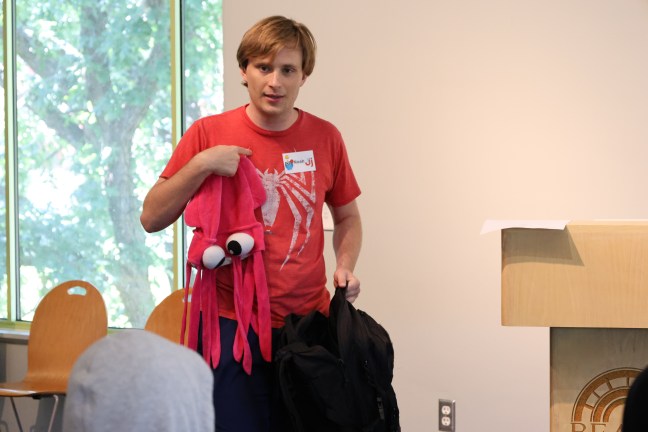
By the day’s end, our writers shared their experience of learning novel words through the collage, challenging themselves to think in opposite directions than they would have normally thought, and paying attention to key attributes they would have disregarded. All these peaked into a refreshingly productive session.

Tomorrow, we look forward to receiving a playwright as our visiting writer, and of course, to more and more writing! Don’t miss our updates!
-Mary Adeyemo, Program Assistant
 K-State Young Writers' Workshop