
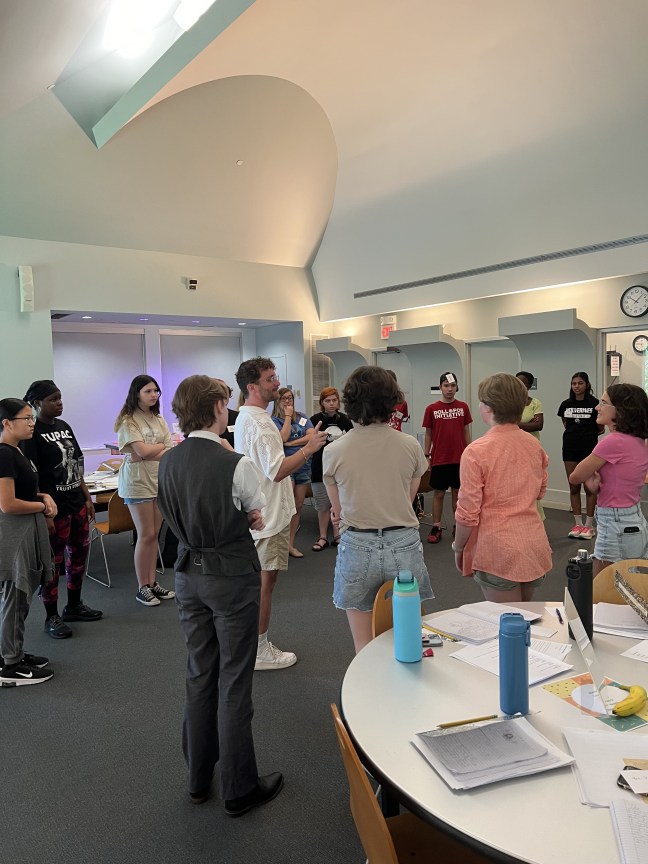
We’ve rapidly approached the halfway point of the workshop with another fantastic day. Wednesday brought new types of writing, including world-building, character creation, and theater.
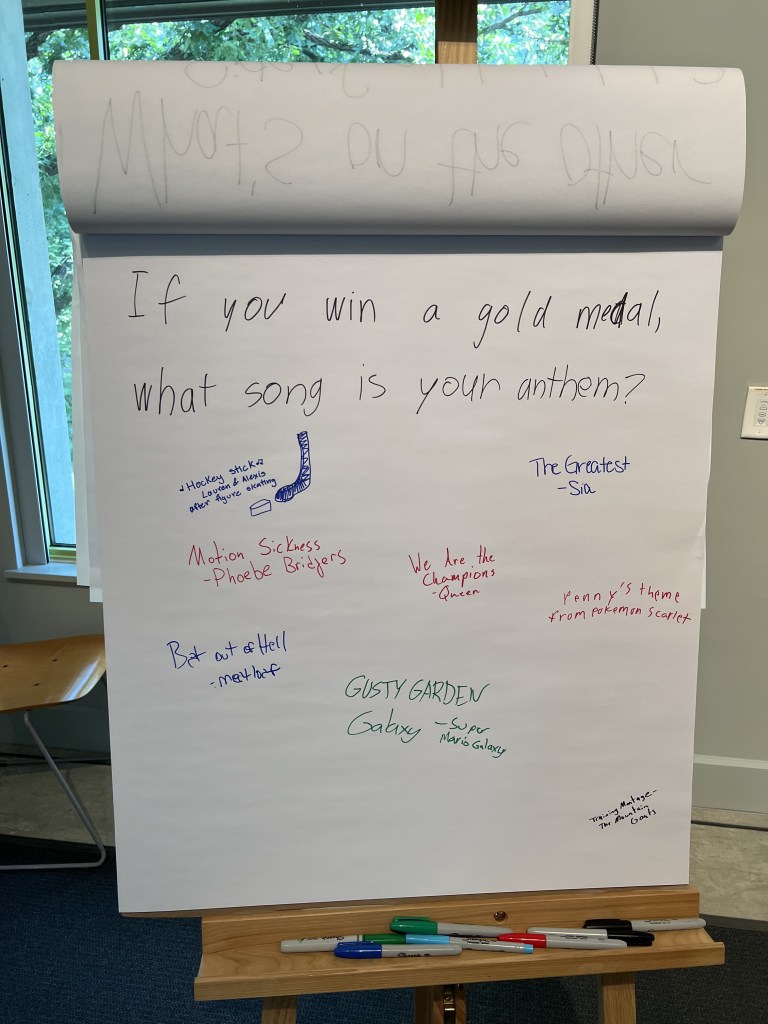
Young writers began the day with the question “If you win a gold medal, what song is your anthem?” As always, the young writers gave creative answers ranging from classics like “We are the Champions” by Queen, to multimedia with “Penny’s Theme” from Pokémon Scarlett.
After a few morning announcements from Traci Brimhall, our Director, Aimee took over with an activity entitled “Once Upon a Word.” The instructors passed out sheets with several uncommon words such as “contretemps,” “effulgence,” and “supercilious,” asking the young writers to give their best guesses as to what they thought the words meant. The young writers created these fake definitions and tested them out in sentences.
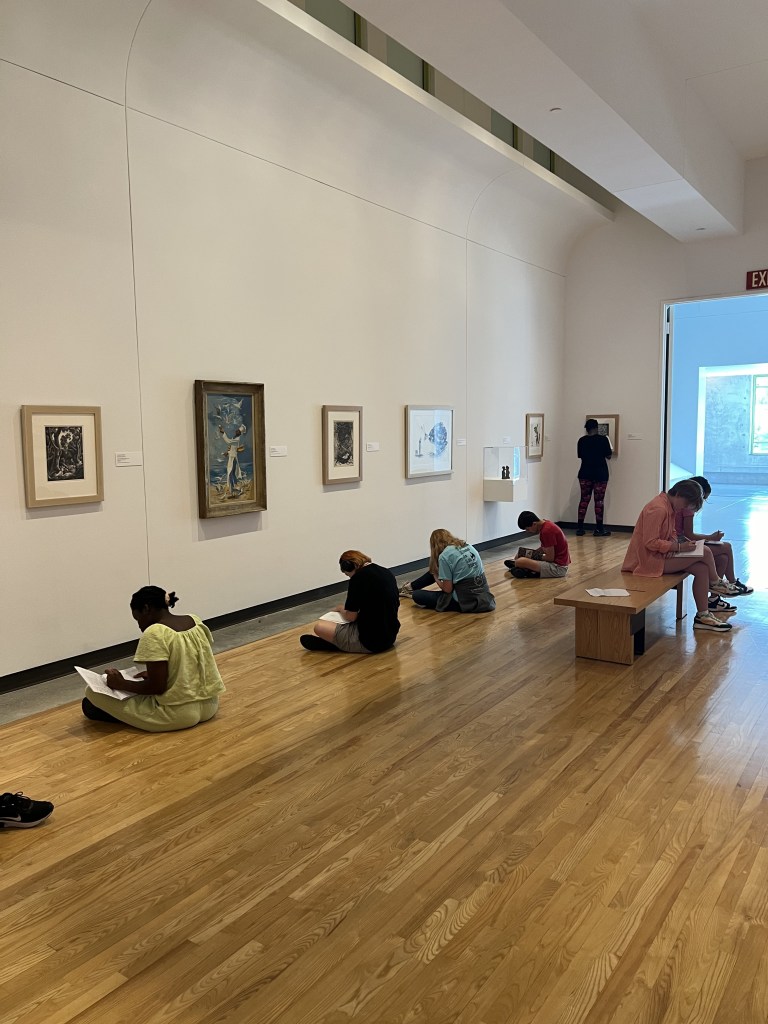
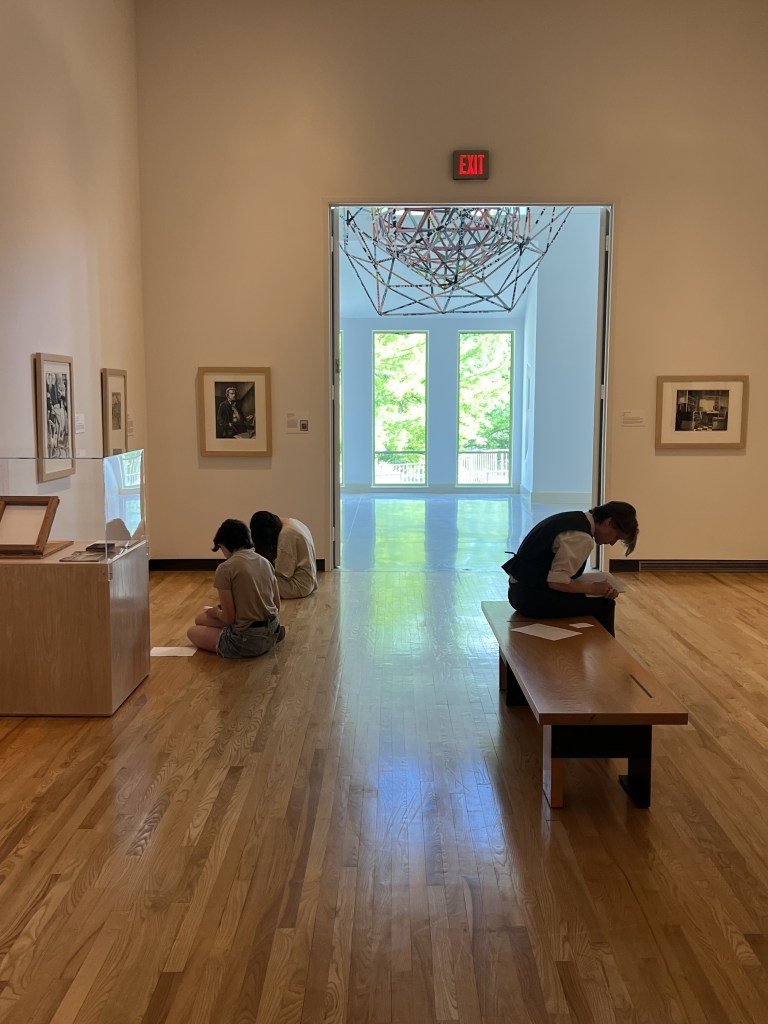
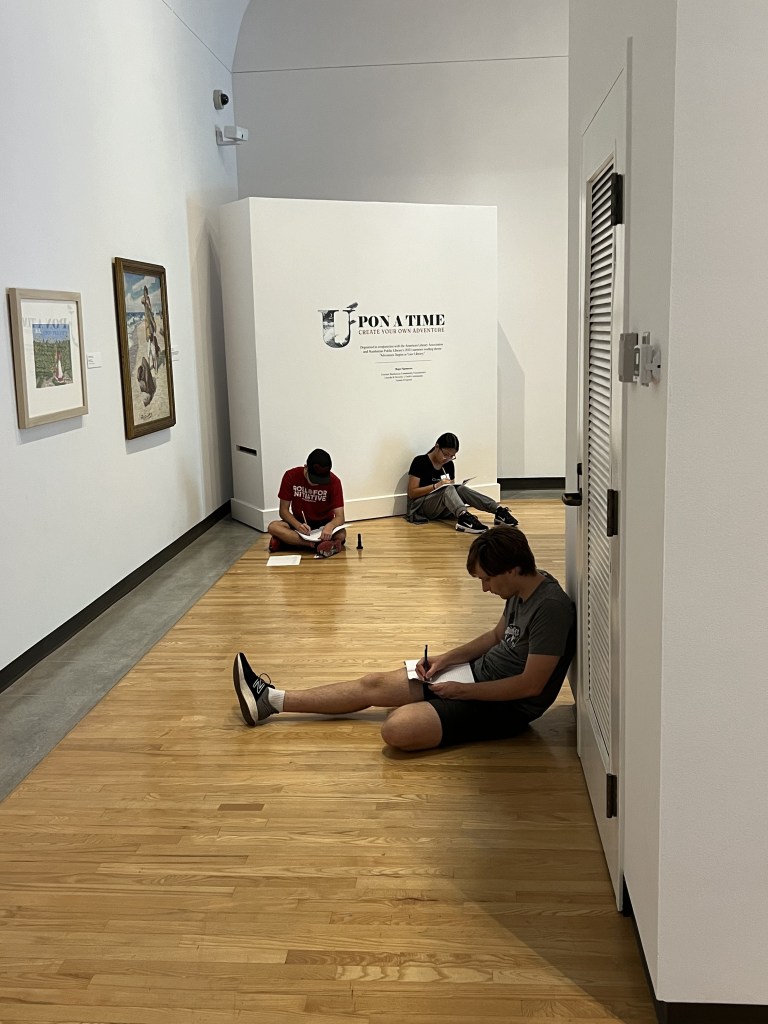
Aimee then passed out cards that contained names of pieces from the Beach Museum galleries, prompting the young writers to compose a story or poem using their word, but inspired by these works of art.
Our visiting writer for the day was Brent Weaver, an alum of the English Department and playwright. Brent shared an activity titled, “Using Playwriting to Develop Interesting and Engaging Characters.” Brent got to know our writers, warming them up for his first activity, one centered around improv.
Young writers volunteered to improvise scenes in a pair, tagging in as they had an idea to create a new scene. Scenes included high speed car chases, a Chick-fil-A lemonade, and a patron of a store who REALLY needed to use the bathroom.
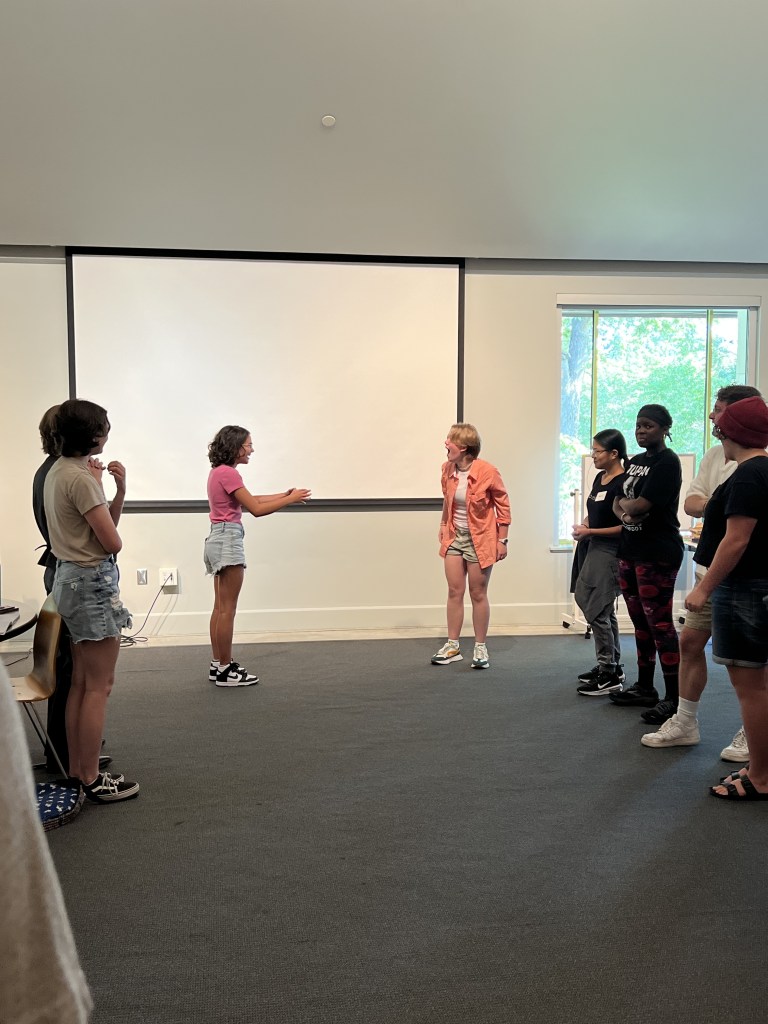
After the young writers demonstrated their acting chops, they discussed the distinctive storytelling features of theatre. Young writers gravitated towards the idea of theatre being performed live, thus being susceptible to change through real time accidents and improvisations.
Some of the young writers volunteered to help Brent read an excerpt from Dear Evan Hansen, so the young writers could consider how the dialogue and reading communicate the character of Evan Hansen in a different manner than a novel would.
Keeping the momentum from analyzing good characters, the young writers practiced creating their own characters using dynamic prompts like “What does your character want more than anything in the world?” and a “Provide a three-word description.”
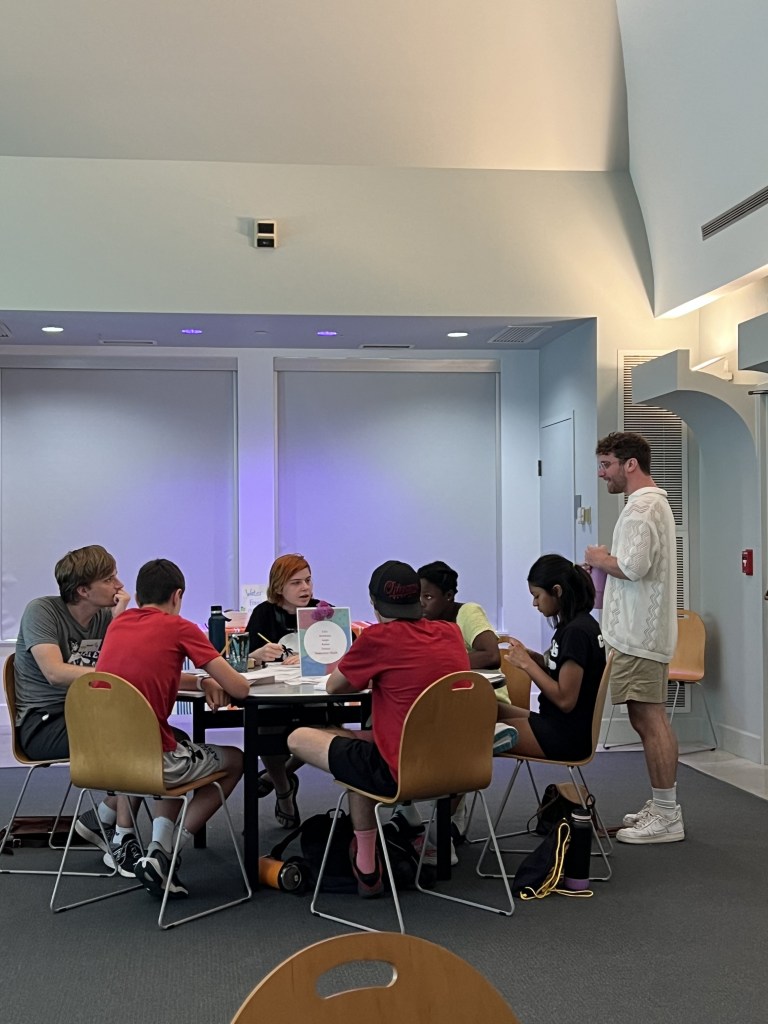
Returning to Dear Evan Hansen, the young writers read some more dialogue, now between characters, setting the table for their next short activity. Each young writer found a partner and introduced their characters and determined what their relationships would be.

With their characters fully fleshed out, Brent gave the young writers a chance to put their work into action. The young writers created two-page scenes that featured their characters most important attributes, and then some volunteered to perform these scenes for the rest of the group. All scenes that the young writers performed were excellent!


With their lunch break complete, the young writers once again participated in the Fantasy Olympics. More accidents befell our fictional Olympians as they collaborated to find today’s marauders. Events like Speed Spelling competition, Ghostbusting, and Synchronized Sorcery were all disrupted as the schemers once again won the game.

After the young writers recharged their social batteries, Cosette transitioned the writers into the afternoon with another character creation activity.
This time, relationships between characters were at the forefront. Cosette prompted writers to consider several scenes, breaking down all possible motivations and outcomes in a simple Post Office scene.

Cosette then gave writers several prompts that the young writers could use to build their own characters. The young writers used their creativity to build characters that had specific skills, species type, role, and backgrounds based on a slip of paper that they drew.
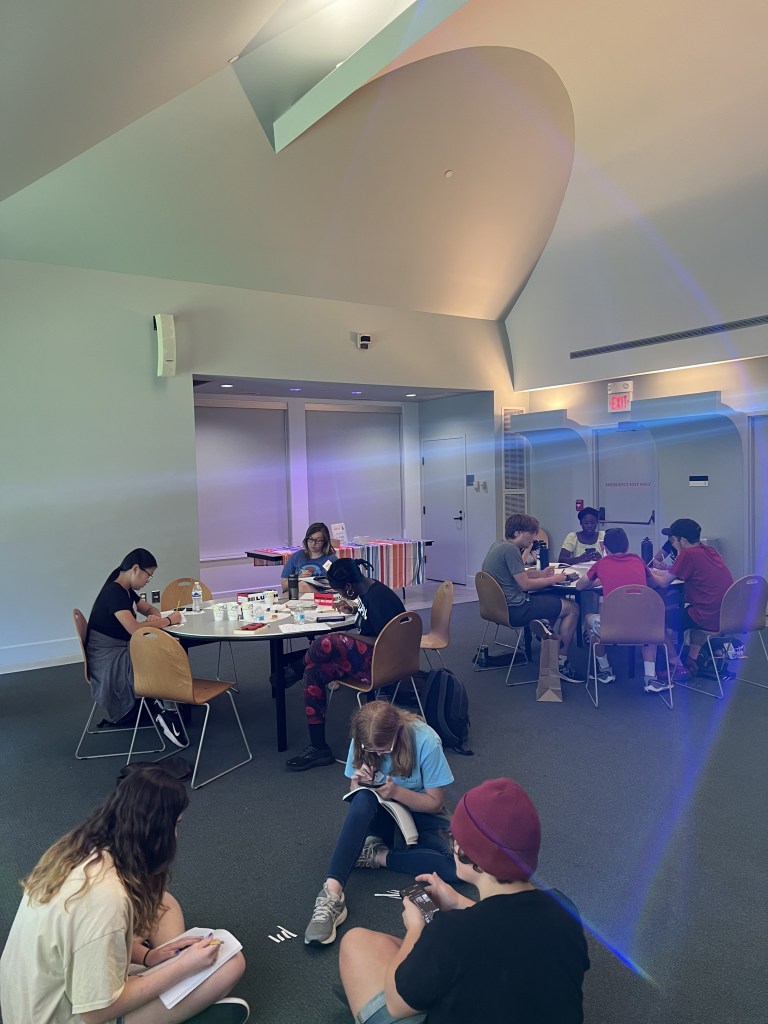

It was time to put these characters in a scene with a partner: The young writers exchanged their assembled characters to build a relationship between them, thinking about how their goals might have similatities or differences.
Fictional friendships were made. Fiction rivalries were also made. Regardless of how each character formed their bond, writers learned how to place characters in the context of others through rich and compelling dynamics. Having used their groupmates’ characters, the young writers concluded Cosette’s afternoon session by reading the scenes they had written to each other.

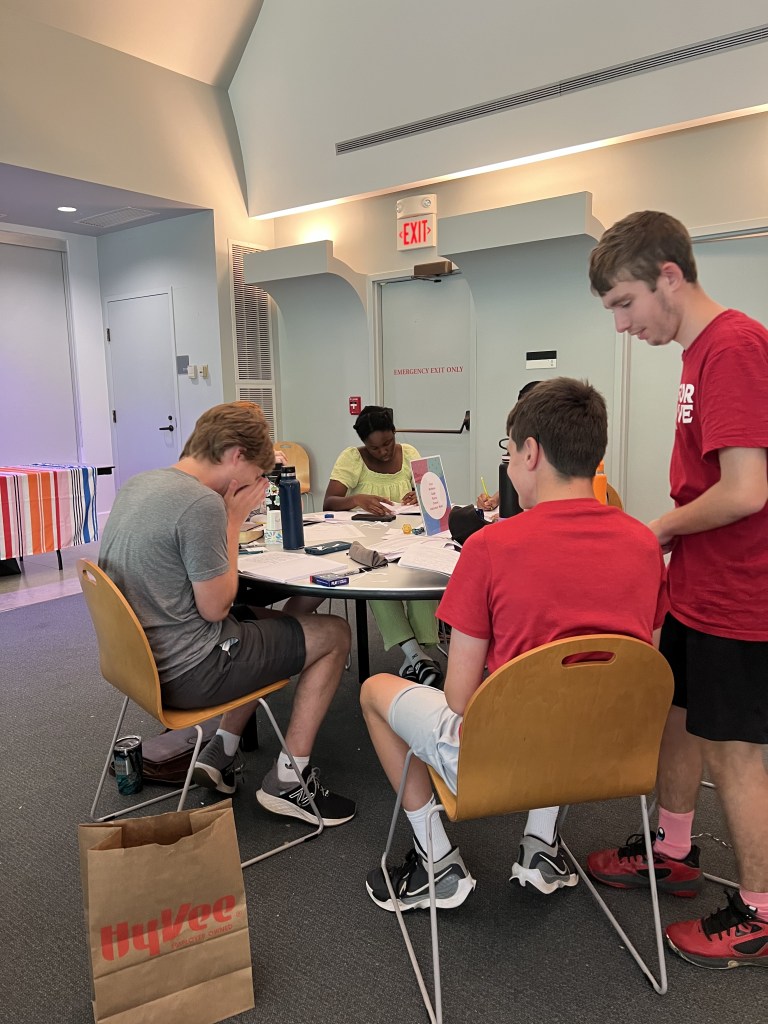
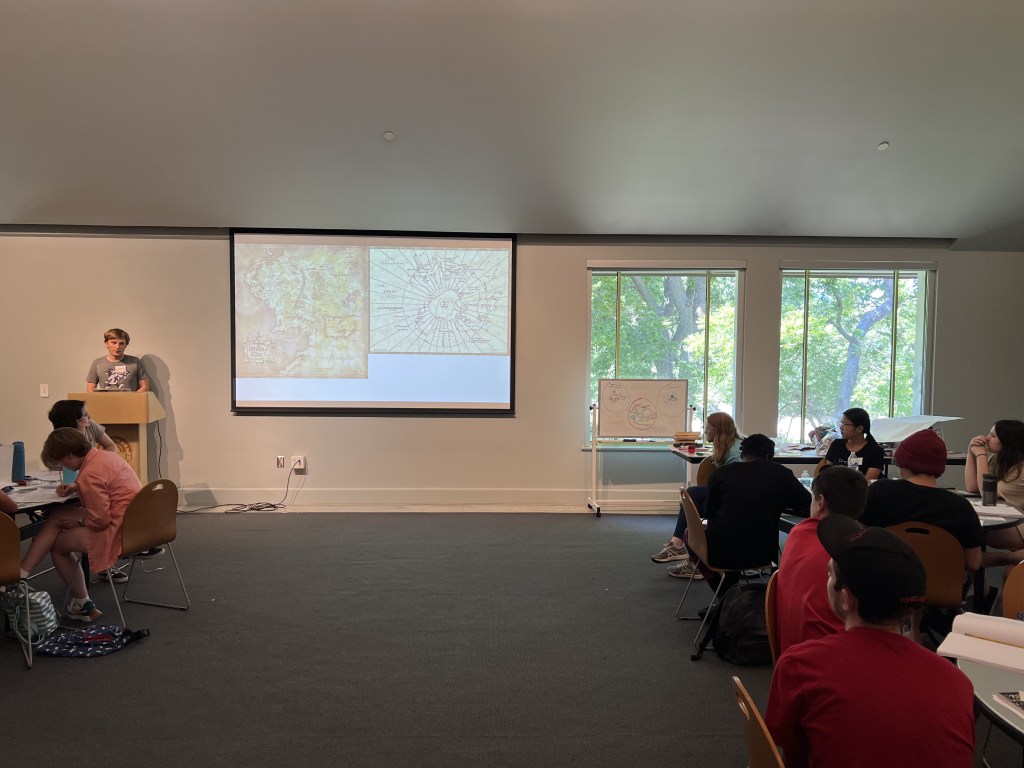
For the end of the day, Noah took the reins of the workshop, helping the young writers build out their fictional worlds.
Entitled “Creative Cartography,” Noah began the lesson by showing the young writers some famous fictional maps. He explained that maps can immediately indicate something about the worlds that they want to build from their stories and want their readers to imagine.
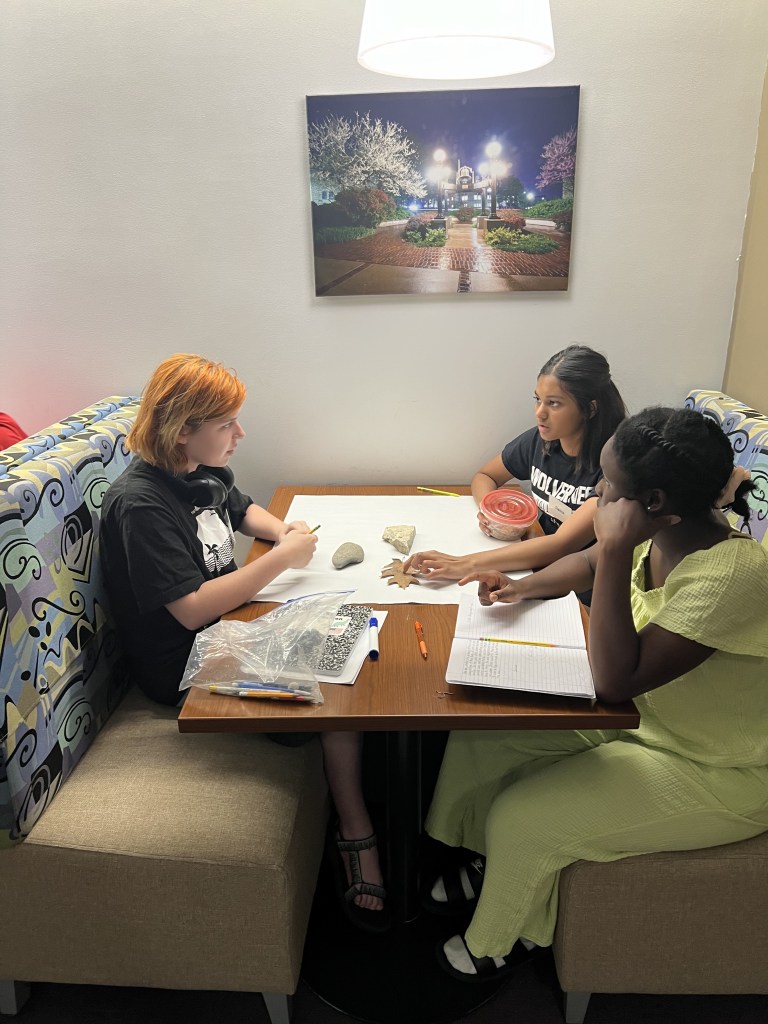
Modeling how to build a map, Noah distributed…cereal! Young writers had to resist the temptation of an afternoon snack in order to use the cereal to create a map of their own. Spilling the cereal onto a large sheet of paper, the young writers traced the pattern to begin creating their world. This technique is often used in the creation of Dungeons & Dragons campaigns. The young writers utilized shapes that they found around campus like rocks and sticks to create interesting shapes in their maps. Whether it was a map of the Fantasy Olympics or a space station for superheroes, the young writers brought their cartography skills and created some fantastic worlds.


Day 3 may have been our most successful day yet, with plenty of great moments. Scenes were written, characters were made, and the worlds of the young writers were put onto paper. Tomorrow, we will be diving into the world of YA fiction, so make sure to tune in to see what our young writers create!
 K-State Young Writers' Workshop