
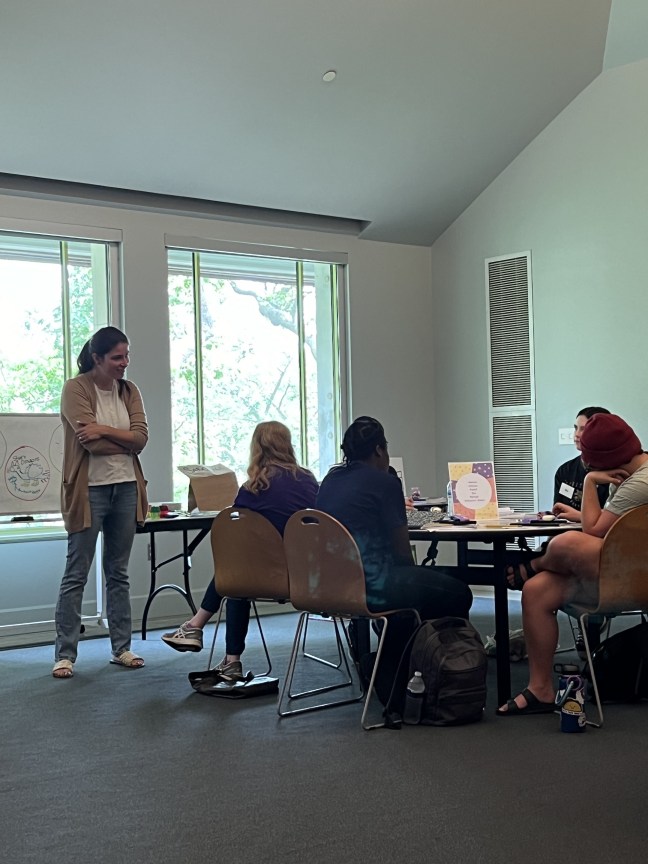
Our second day opened just as our first did, with a question to get our young writers warmed up: “Who/what are the marathon runners running from?”
Writers gave a variety of reasons ranging from the abstract, such as “their problems/responsibilities,” to the concrete, such as “vampires.”

After the young writers flexed their writing muscles, Aimee began our first activity called “Feeling is First.”
The young writers shared what they liked the most about poetry, including the form of poetry and the complicated way in which readers and writers engage with each other. They then considered what poetry is, keeping in mind the advice of E.E. Cummings to evoke feeling in poetry. Rather than telling their audience, Aimee and the young writers discussed physical responses to feelings, and how those responses in turn prompt audiences to feel.
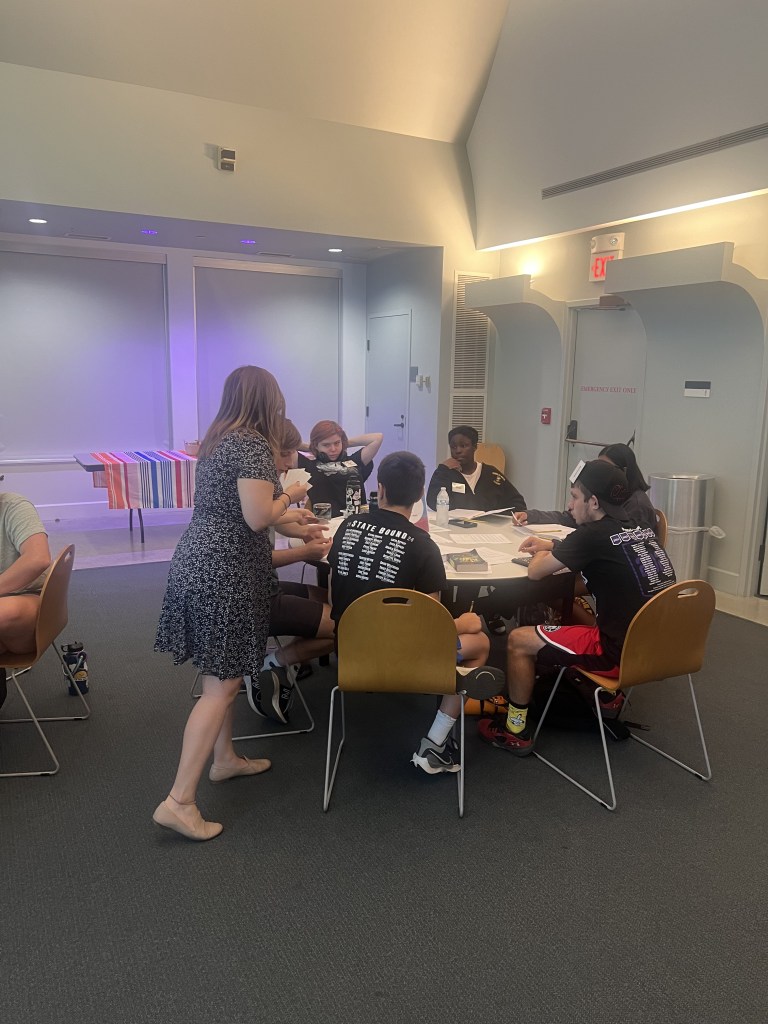
Continuing to think about feeling in poetry, the young writers were tasked to draft two lines inspired by an emotion assigned for the activity – and, as an extra challenge, Aimee gave writers a word that they must include in those lines as well. The young writers continued the poem that their neighbors had started, writing two more lines based upon what the person next to them wrote. Poems rotated fully around each table, with each writer only reading the line directly above their own for context. By the end, the young writers had created several full-length poems that relied on the emotional appeal of their neighbors’ work.
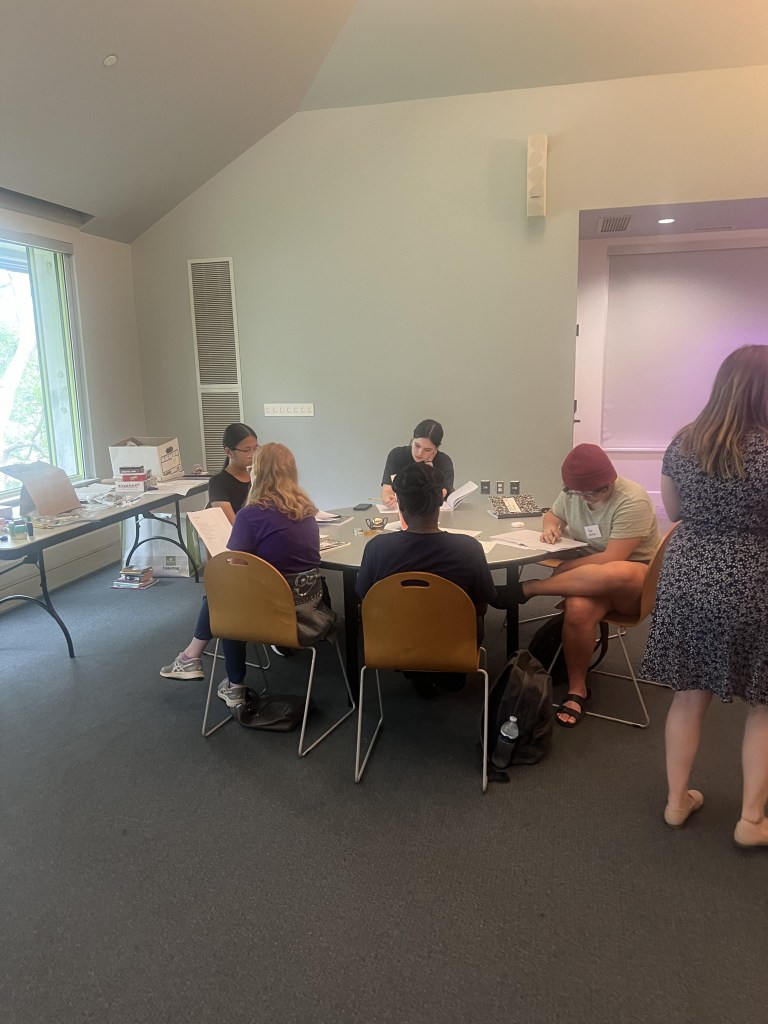
Next, the young writers were visited by internationally published poet, Dr. Luisa Muradyan. Dr. Muradyan began her Generative Poetry Workshop with some poetry reading tips to help break through live reading anxiety. Putting these strategies into practice, Dr. Muradyan then read from her own work, modeling how poets can comfortably share what they have written.
Dr. Muradyan then asked our young writers to select an emotion from a bank of abstract emotions and then, in five minutes, define the emotions in as many ways as they could. Practicing their new poetry reading techniques, the young writers went around their tables and read one of their definitions, first for their table and then for the larger group.

Dr. Muradyan transitioned the young writers to think about how various audiences can inform the way in which they can craft a poem. She then prompted young writers to consider their last three text conversations. Upon being asked by Dr. Muradyan, the writers all said that they did not use the same tone with all three conversations. The young writers wrote short poems based upon those conversations, considering the specific tone. Again, the chance was offered to share their work, first with each other, then selectively with the group. After reading another poem, writers were then turned towards writing towards an audience that they had never met.
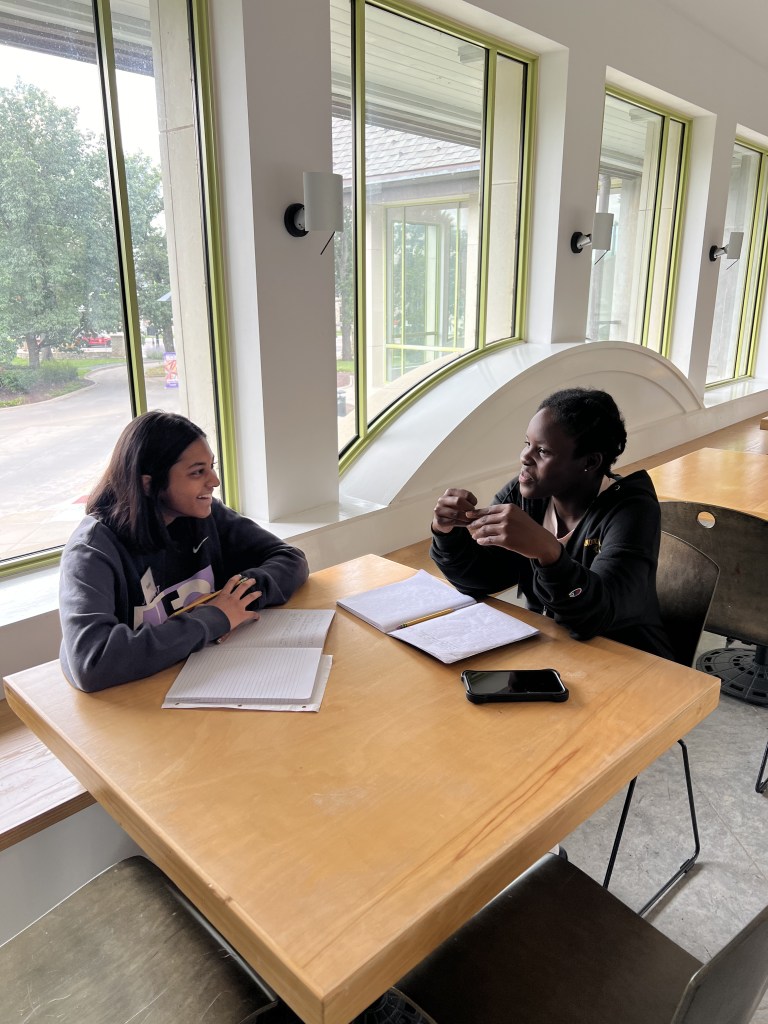
The young writers some groans of “excitement,” and we moved into our final activity with our visiting author today. This activity saw our writers break up into pairs and share letter poems with each other. Writers were encouraged to find other writers who they did not know in order to challenge themselves in their writing endeavor. Lastly, writers highlighted particularly successful lines that they were proud of, then, shared them back with their groups.

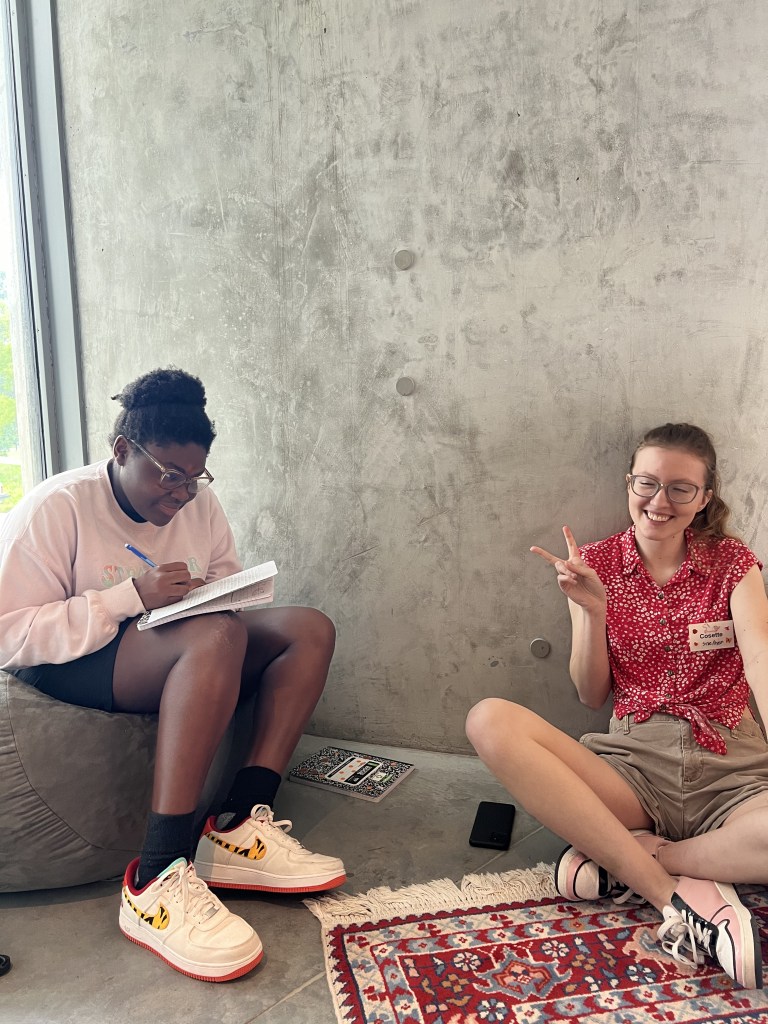
Once lunch was finished, the young writers circled up for another game of Fantasy Olympics (our workshop’s version of Mafia) led by Noah. Just as it happened yesterday, saboteurs infiltrated the Olympics causing accidents like “adding weights to the shoes of a horse in the 1000 meter flying horse race” and “removing all of the screws from the skeleton bob sledding sled.” Once students were sabotaged, they were invited to contribute to the accident bag for tomorrow. The saboteurs won today…but the week is far from over!

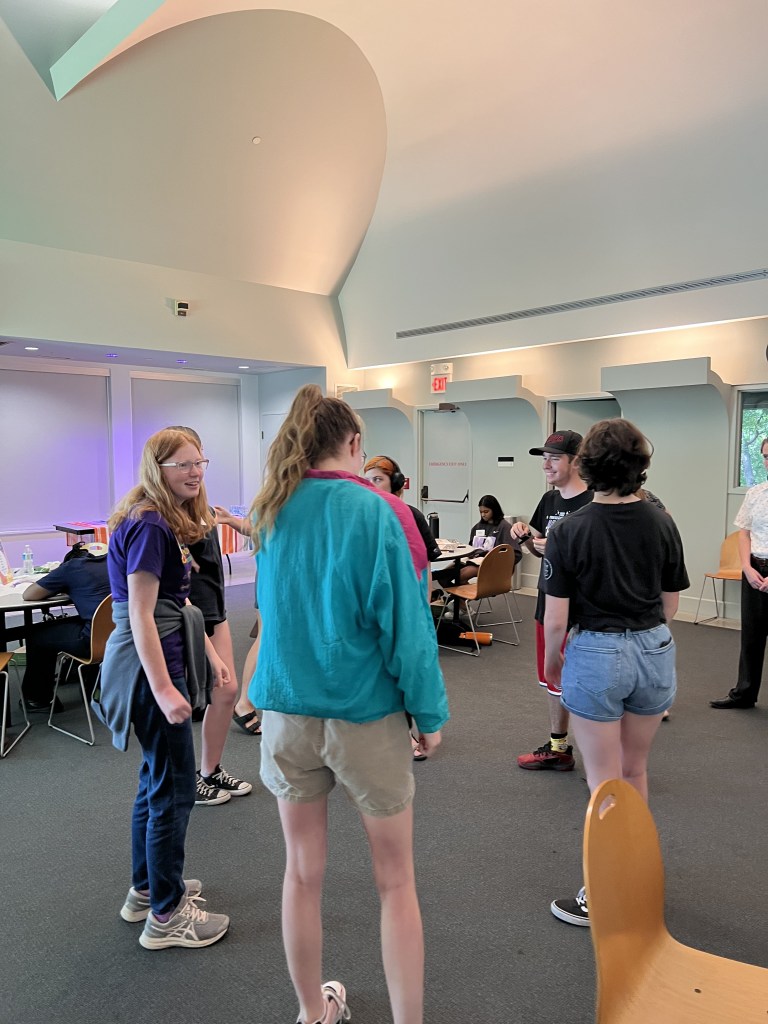
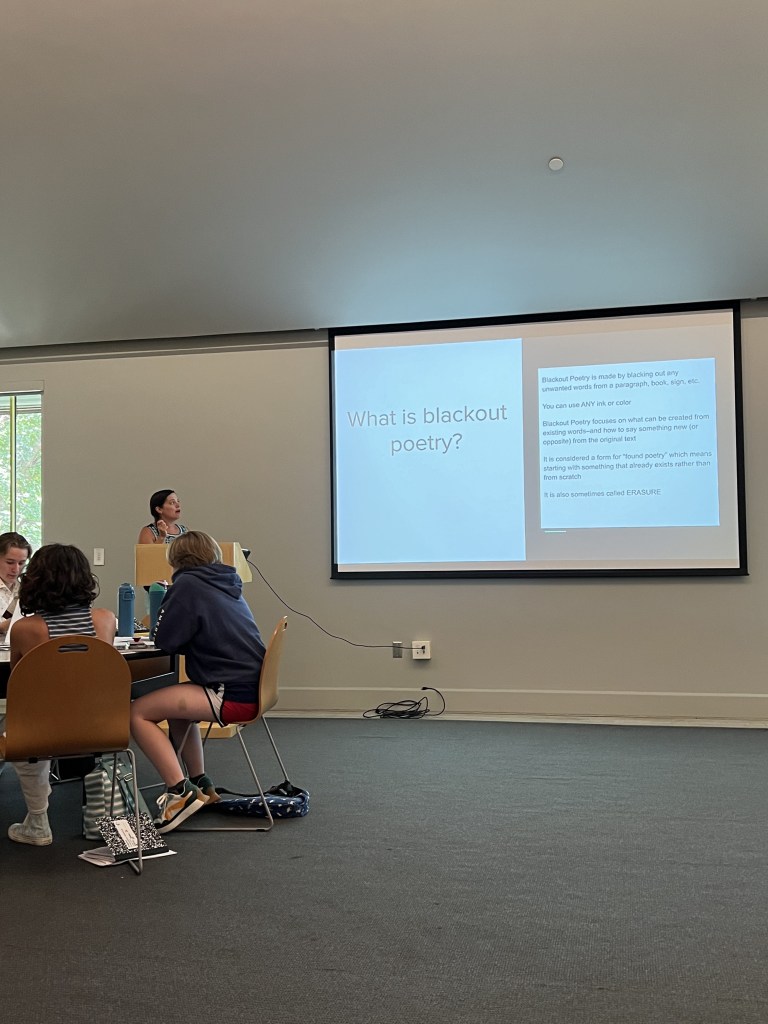
Our Director, Traci Brimhall, took over when Fantasy Olympics concluded. Moving into the afternoon, the young writers were introduced to Blackout Poetry, the art of erasing words from a page that already exists to create a poem. Young writers then had the opportunity to choose from a selection of books that they could practice Blackout Poetry on. Some brave poets read their pieces to the rest of the group.


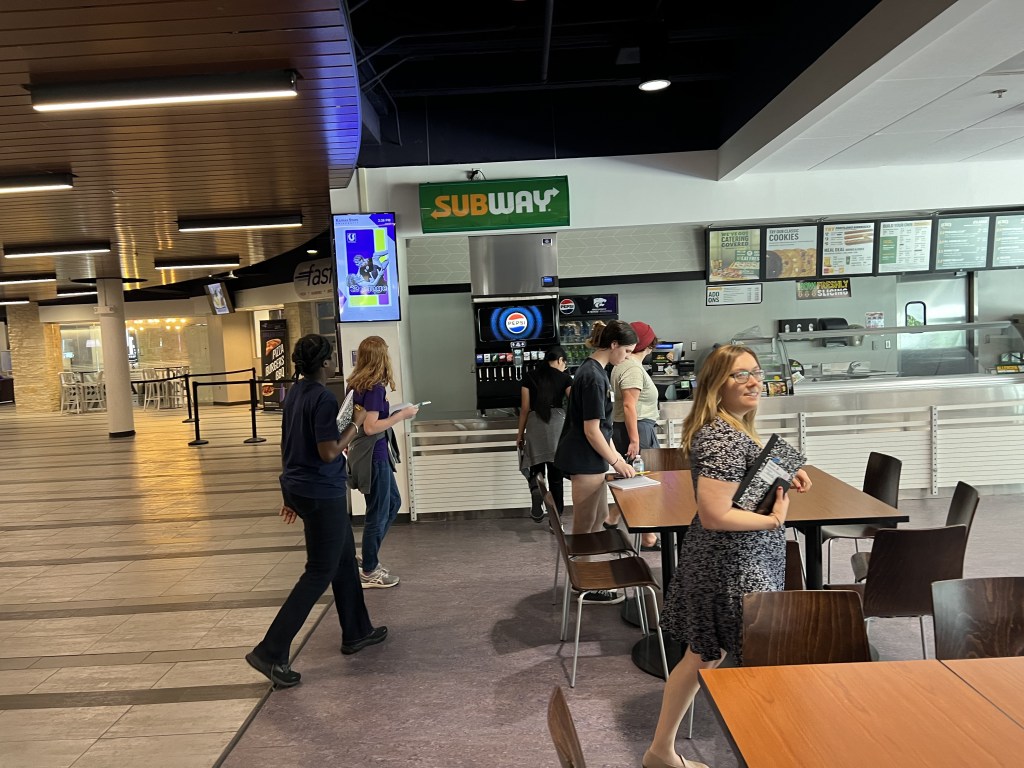
For our final lesson of the day, Cosette led the class in the poetic style of cento, also known as found poetry. Writers were first introduced to a found poem and were prompted to guess where the lines that composed it were from. Following this introduction, our instructors took the young writers to their groups’ choice of Student Union and the English department building. Here, they were given the opportunity to find interesting words and phrases for themselves. With their accumulating lines, writers returned to the Beach Museum to assemble their very own found poetry. They rounded out the activity by sharing what the found, where they found it, and what they created.
Lastly, Traci led the young writers in a free writing and revising time. Some writers elected to take inspiration from the galleries of the Beach Museum, while others finished their Blackout Poems and centos.
The young writers brought electric energy and enthusiasm to poetry today and created some truly inspired pieces. We’re excited to see what tomorrow brings as we turn to theater.
-Eli Long, Program Assistant
 K-State Young Writers' Workshop