

It’s already Wednesday, which means the Young Writers’ Workshop is halfway over! We are soaking up every last moment we have together with a jam-packed day today.
Our young writers began with the starting question: How would a bee describe a flower? My favorite answer is that the bee wouldn’t be able to put it in words – it instead would do a shimmy!
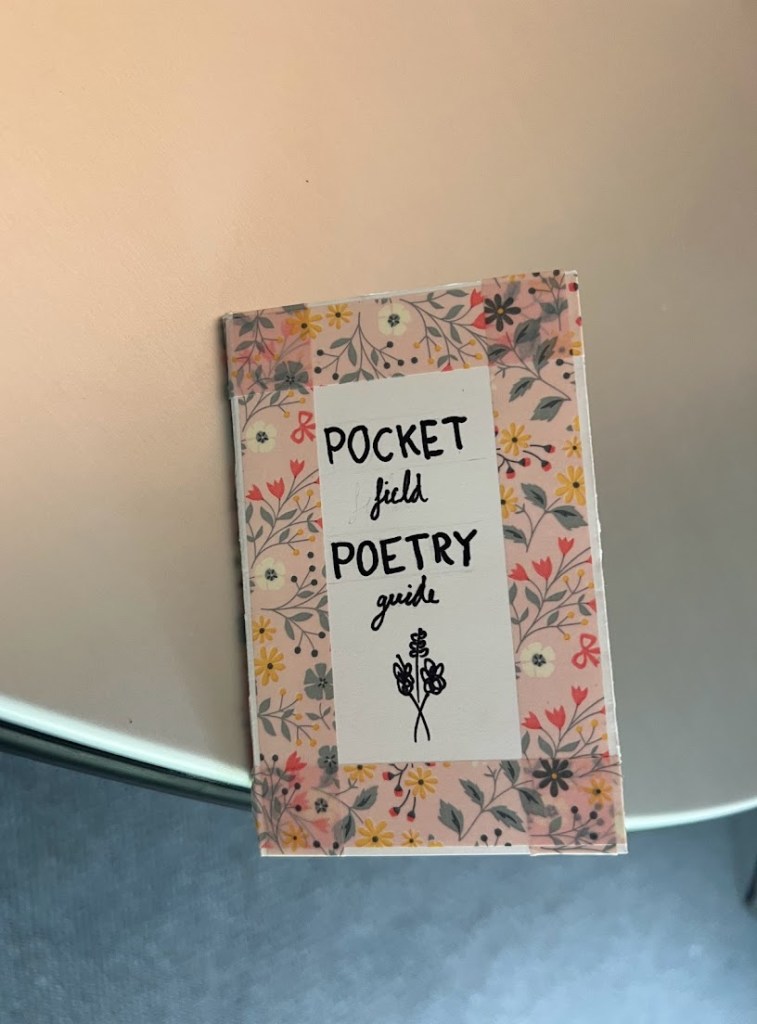
To begin the day, Totty taught the young writers how to create a small booklet out of one sheet of paper. The young writers then decorated their books with washi tape and drawings to fully transform them into their own Pocket Poetry Field Guide.


Then, Totty explained that today, one type of poetry the young writers would focus on is ekphrastic poetry, which means poetry written about works of art. The young writers read “The Starry Night” by Anne Sexton, a poem inspired by Vincent Van Gogh’s “The Starry Night” painting. Through analysis of the poem, the young writers learned that ekphrastic poetry isn’t an exact description of a piece of art, but is rather about what it makes you think or feel. Then, the young writers got the chance to explore the art galleries at the Beach Museum for inspiration. They each chose three pieces of artwork to inspire their writing. Once they had contemplated what feelings the artwork stirred, the young writers set to work to write their poems.


Next, the young writers welcomed Melissa Fite Johnson, author of two poetry collections, as the visiting writer of the day. She began her lesson with a quiz…but the young writers didn’t worry as they were supposed to answer the questions wrong! For example, to the question: “What can you do with a hen?”, some answered: “Teach it to make soup.” Or, for another example, to the question: “What would you do if you shrank to the size of a pea?”, some answered: “Go back to sleep.” The next exercise Melissa led had the young writers describe an abstract noun as concrete things, like colors, textures, sounds, foods, animals, and more. These exercises helped the young writers think creatively and become comfortable accepting ideas even if they didn’t make sense.
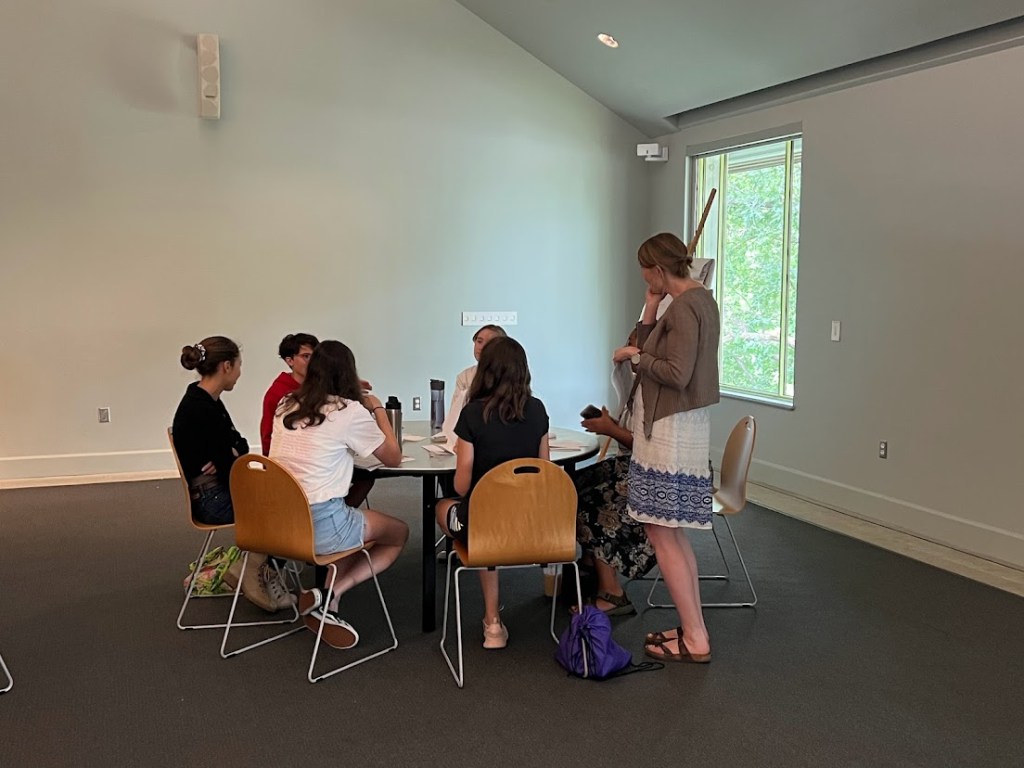
After these creative exercises, Melissa led the young writers in a discussion about certain poems she had prepared for the young writers to read. Some included “[& what is a country but the drawing of a line…]” by Safia Elhillo, “Saturday at the Canal” by Gary Soto, and “The Quiet World” by Jeffrey McDaniel. The young writers shared their observations about the structures of the poems and what spoke to them when reading, and no two observations were exactly the same. Melissa encouraged the young writers to embrace this difference in interpretation, as there is no right answer in poetry.
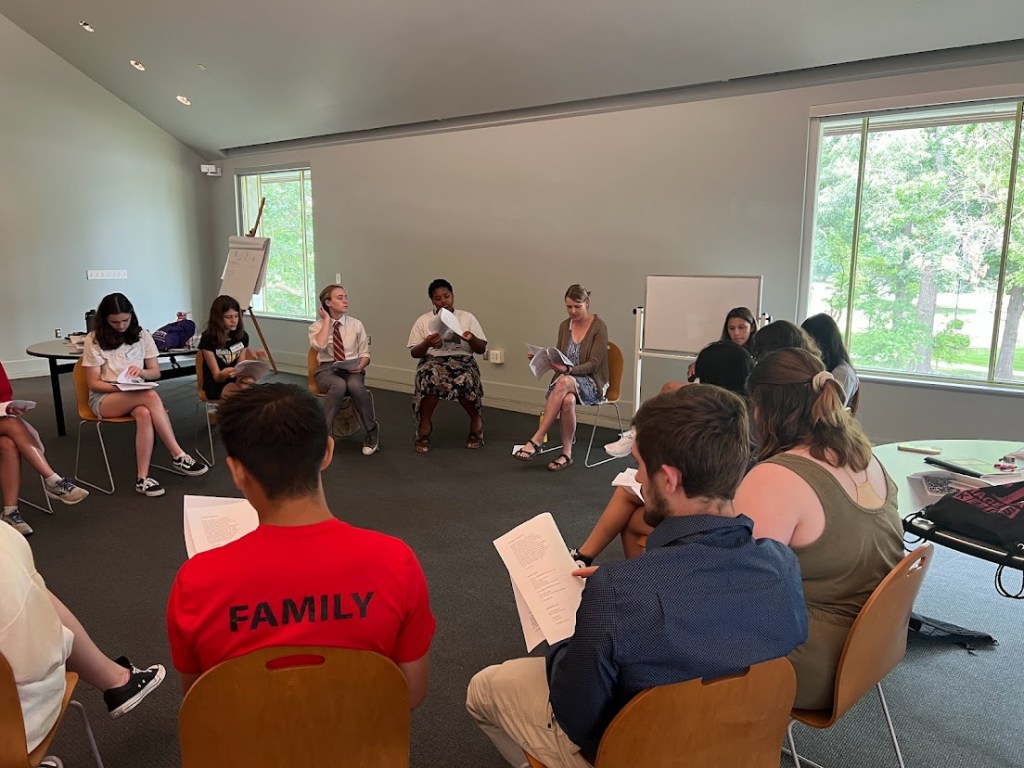
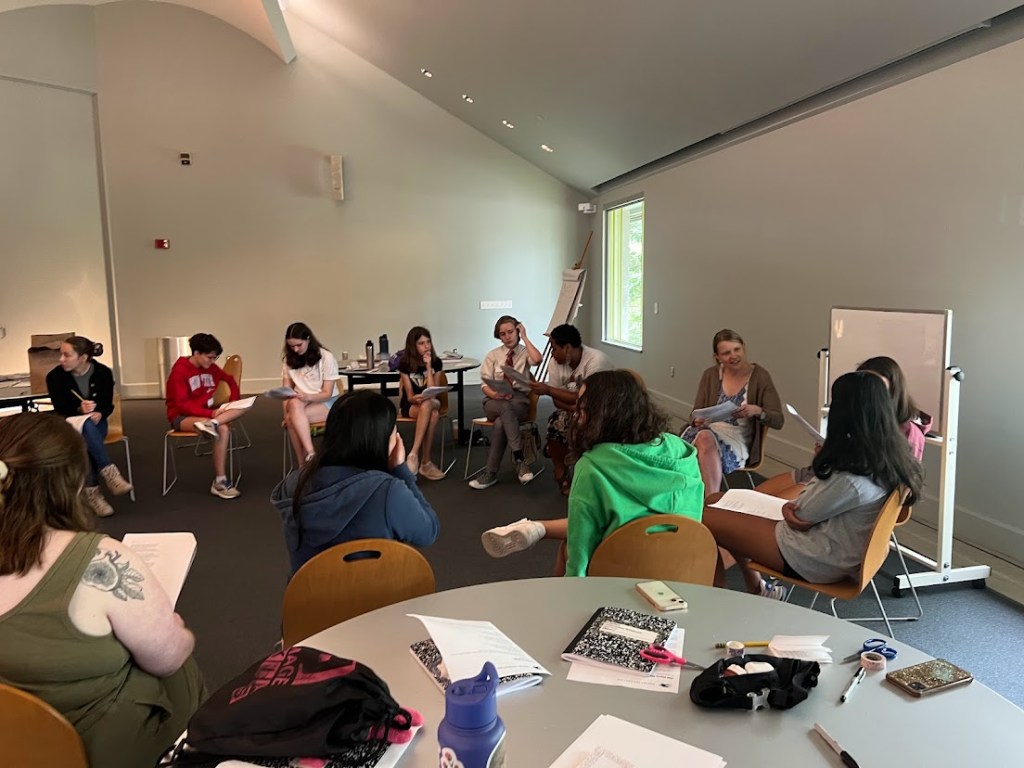
Then the young writers combined both the creative exercises and their interpretations of poems to write their own poetry based on either their answers to the quiz or their concrete assignments to their abstract word. Before sharing, the young writers discussed their processes when writing their poems, which varied from going off one idea that popped into their head all the way to having a full story fleshed out to write about.


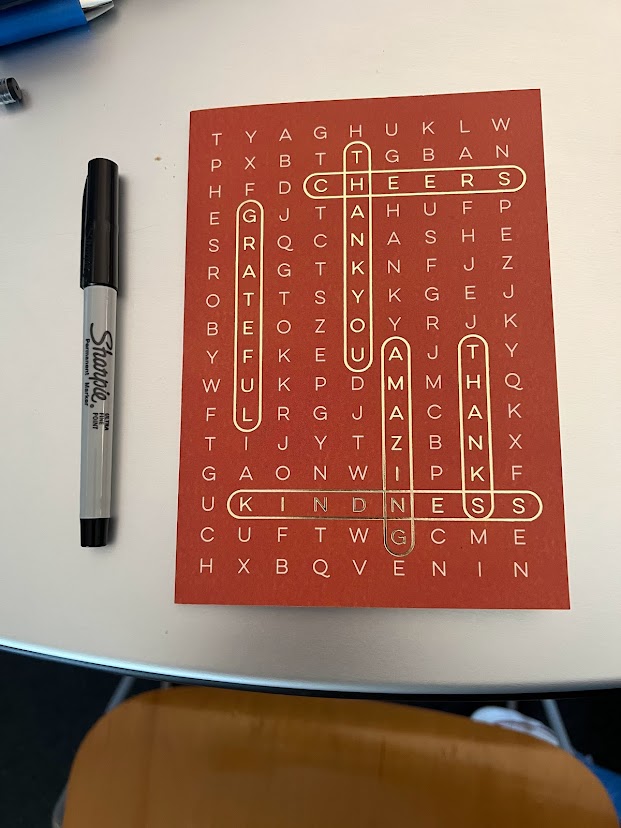
During lunch, the young writers signed a thank you note to our alumni donors for their support and funding of the workshop. Currently living in Plano, Texas, Helen and Duke Dupre have graciously funded this workshop for the past few years. Helen graduated from Kansas State University in 1969 with her bachelor’s degree in English, while Duke graduated from Kansas State University in 1967 with his bachelor’s degree in business. We are extremely grateful for their support which allows our creative young writers to attend our workshop at no cost to their families. (Interested in supporting future Young Writers’ Workshops? Visit the Foundation web site at http://www.found.ksu.edu and click “Give,” selecting “English Department Fund” and adding “Young Writers’ Workshop” in the space provided.)
After a game of High School Mafia: 1992 Palm Springs Platypuses edition, the young writers turned their focus back to poetry with an activity led by Riley. To introduce epistolary writing, which comes from the word “epistle” (letter), Riley dropped “mail” off at each table. In each envelope, the table got a letter with an abstract concept or object asking a question. For example, one letter’s abstract concept was “Winter,” and the question Winter asked was “Don’t you think it’s cold?”. The young writers then created a response back to their abstract concept in a poetry form, including an answer to their concept’s question, one weather-related simile, a memory with the concept, a color or food-related metaphor to describe life without them, and a question for the concept.

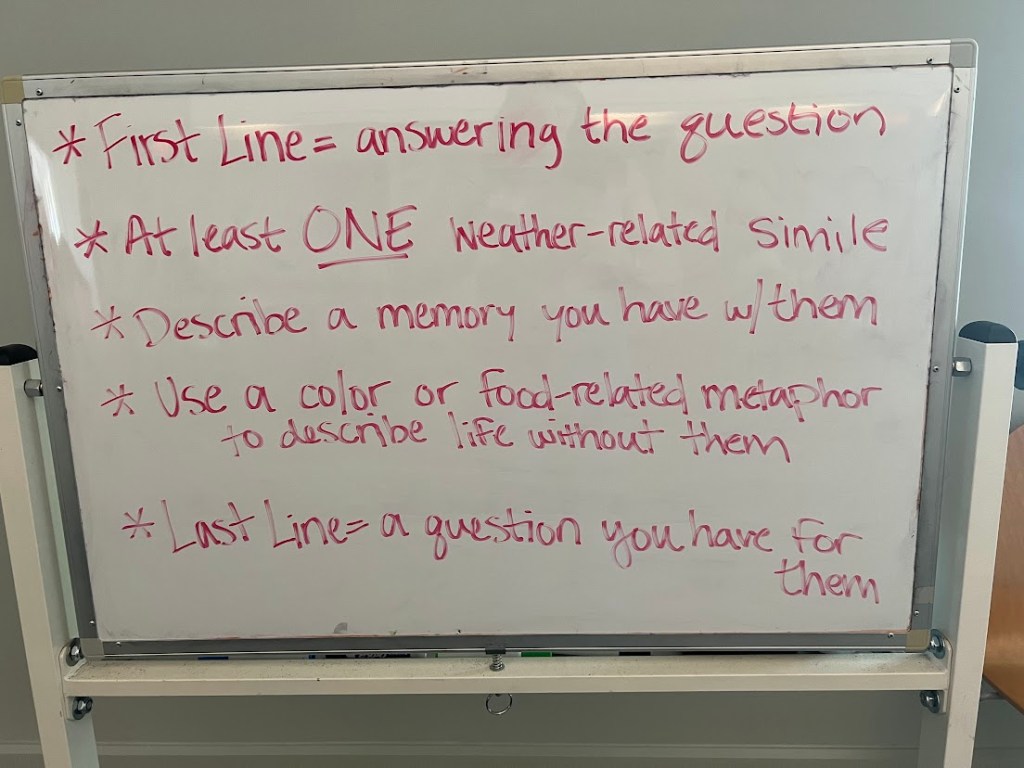
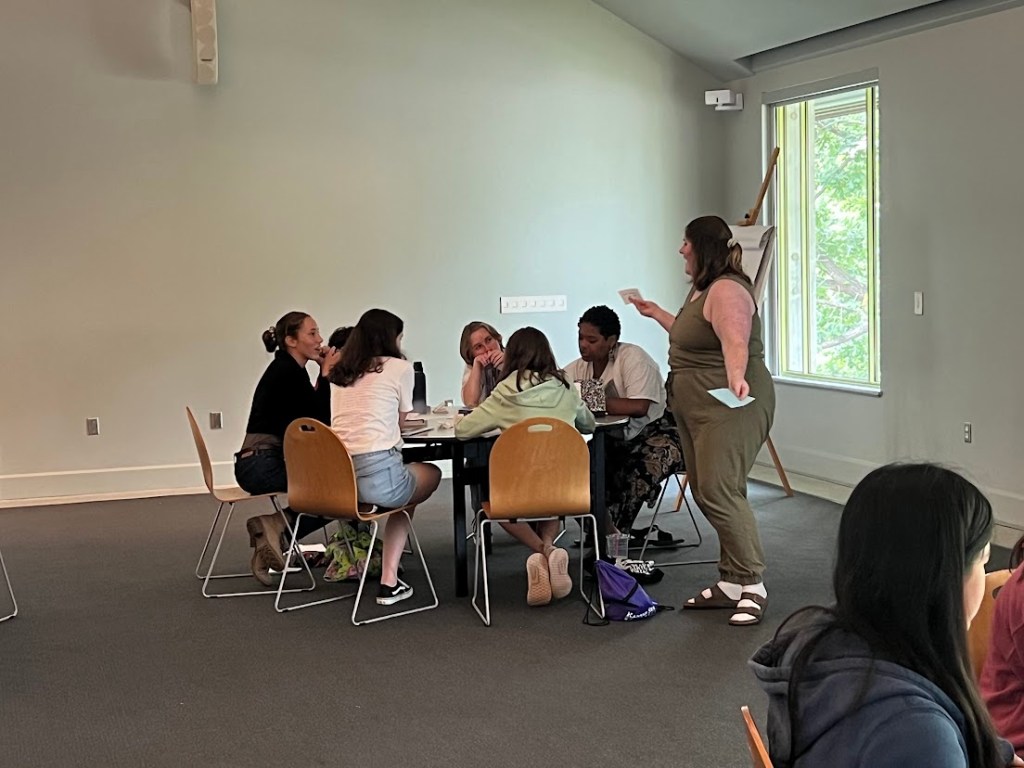
Occasionally, Riley would walk around and give young writers cards with words on them like “waterfall,” “learn,” or “shady”. If a writer received a word card, they had to incorporate that word into their poem. Once the young writers finished their poem, they had to imagine they were the abstract concept and respond back to the letter they had just written.

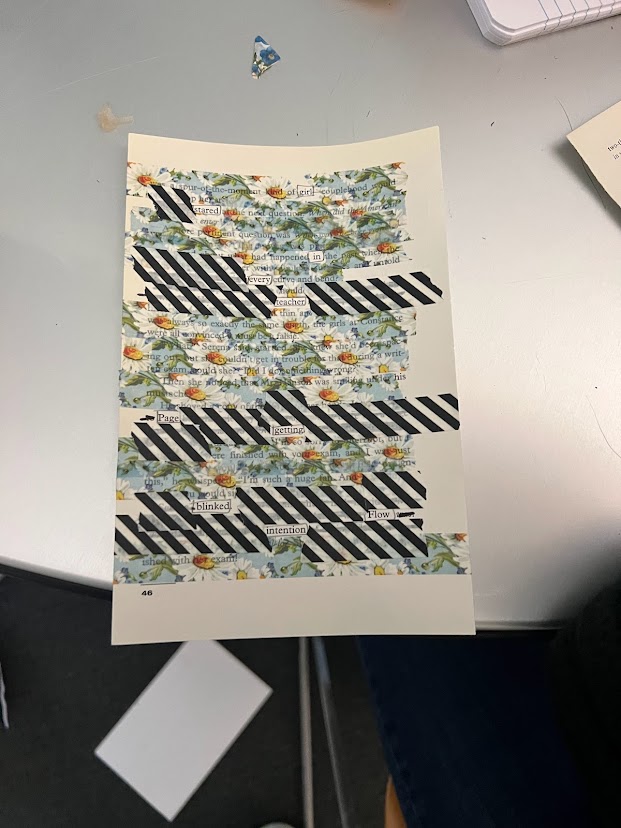
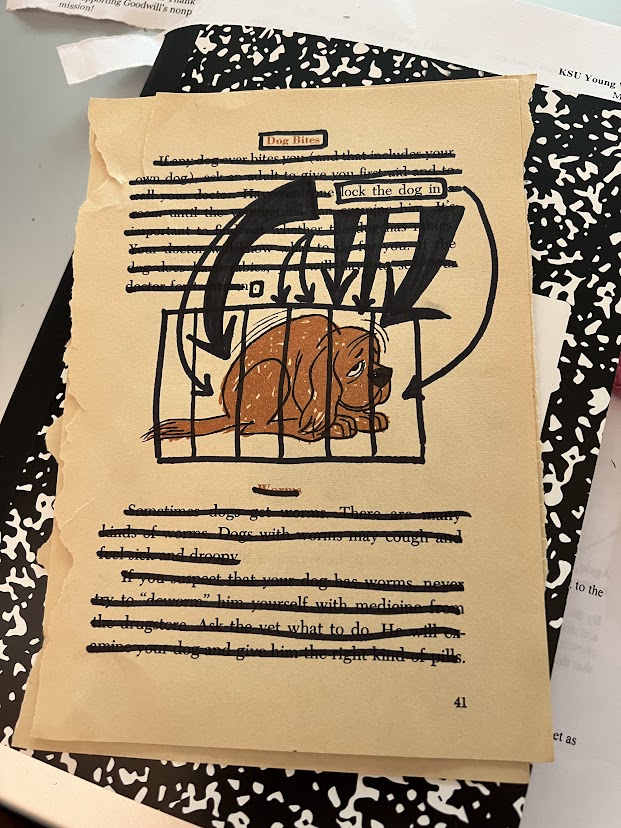
For the young writers’ final activity of the day, they wrote some blackout poetry! This activity involves ripping out a page in an old book or magazine, finding words to make a poem, and then blacking out the rest of the words with a sharpie or pen. For their first poem, they were tasked with writing a ten-word poem.


For their second blackout poem, they wrote “Hate Poems,” or anti-love poems. Finally, for their third blackout poem, they wrote a twenty-seven word love poem. The writers were so creative with their designs, drawing pictures and even using washi tape to block out words.
To end the day, the young writers pondered our parting question: What sound does silence make? As always, they amazed us with their creative answers, including the sound of trees shaking in the wind and the sound of your own thoughts racing.
The young writers make every day unique and full of creativity, and every staff member ends each day looking forward to the next one. We are excited to see what excitement and energy the young writers bring tomorrow!
– Jordan Dombrowski, Program Assistant K-State Young Writers' Workshop